Popular on TelAve
- Conexwest: Shipping Containers Are Powering the Next Generation of Bitcoin Mining Infrastructure
- Quadcode Acquires Significant Stake in Game 7, LLC - The Parent Company for FPFX Tech and PropAccount.com
- New Book Warring From the Standpoint of the Throne Room Calls Believers to Pray From Victory
- $6 Million Funding Secured as Retail Expansion, Operational Streamlining, and Asset-Light Strategy Position the Company for Accelerated Growth $SOWG
- HRC Fertility to Celebrate Grand Opening of New Beverly Hills Location During National Infertility Awareness Week
- Revenue Optics Launches Talent Infrastructure Platform for SaaS Revenue Hiring and Appoints Sabz Kaur to Lead Growth
- American Properties Realty, Inc. Leadership Attends NAHB International Builders' Show in Florida
- Nieuwe standaard in webdesign: Professionele website laten maken voor het MKB vanaf €249 door Websitepioniers
- Buildout Launches CRM, Completing the Industry's First AI-Powered End-to-End Deal Engine for CRE
- Homeowner Prep Announces Strategic Language Shift: Replacing "Renters" with "Future Homeowners" to Inspire Wealth-Building Mindsets
Similar on TelAve
- Game Day Private Jets Launches REVUP Platform to Transform Fan & Donor Travel Into a Revenue Engine for College Athletics
- SnapTax Launches AI-Powered Tax Planning Platform for Freelancers and 1099 Workers — Now Free for 90 Days
- Congressional Roundtable Exposes Mental Health Crisis: More Spending and Treatment, Worse Results – CCHR Demands Accountability
- $16 Billion Market by 2034 in Underwater Drones Presents Huge Opportunity for AI-Powered Autonomous Vehicle Serving Defense & Commercial Customers
- Boston Industrial Solutions Expands Its Industry-Leading UV Ink Portfolio with the Launch of a Matte Ink - Natron® UVPZ
- Century Fasteners Corp. Exhibiting at 2026 MRO Americas Show – April 21-23, 2026 – Booth #2257
- Kiko Nation Expands to Apple App Store, Achieving Full Mobile Deployment for Livestock Digital Registry Platform
- The Lawyers' Marketer Launches Claude AI Implementation Service for Law Firms
- L2 Aviation Earns FAA STC for Thales AVIATOR 200S for Boeing 777
- HousingWire launches Mortgage Rankings, bringing a data-driven benchmark to originator performance
Gigasoft Solves AI's Biggest Charting Code Problem: Hallucinated Property Names
TelAve News/10889283
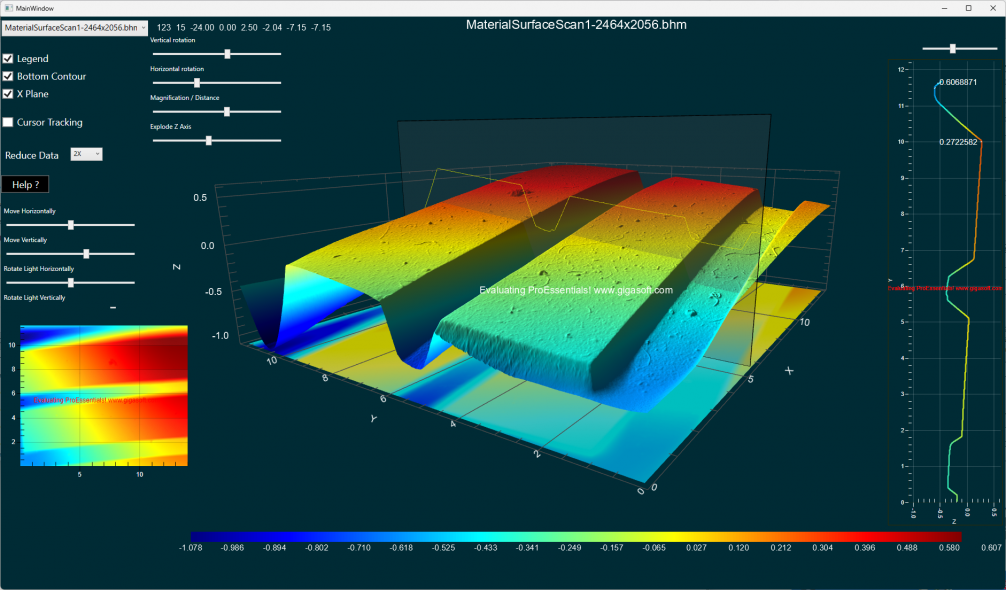

ProEssentials v10 introduces pe_query.py, the only charting AI tool that validates code against the compiled DLL binary — eliminating the #1 source of errors in AI-generated chart code.
DALLAS - TelAve -- When developers ask AI assistants to write charting code, something predictable happens. The AI generates property names that do not exist. If the developer uses that code, it will not compile — and they are left searching through documentation to find the correct property path. For charting libraries with 1,000+ properties, this cycle of hallucinated names, compile errors, and manual correction is the single biggest time sink in AI-assisted development.
Gigasoft, Inc. has addressed this directly in ProEssentials v10 with pe_query.py, a Python-based AI assistance tool that works with Claude, ChatGPT, GitHub Copilot, Gemini, and local AI models. Unlike documentation-search approaches that reduce hallucination probabilistically, pe_query.py eliminates it deterministically by validating every property path against ground truth extracted from the compiled DLL binary.
The system gives any AI assistant on-demand access to 1,104 properties, 80 methods, 40 events, and 167 enumerations extracted directly from the ProEssentials assembly. Before the AI delivers code to the developer, it runs a validate command that checks each .NET property path against this authoritative source. Invalid paths receive correction suggestions pointing to the actual API element. The result: the developer receives code with every property path verified before they see it.
More on TelAve News
"Every other charting vendor tells developers to review AI-generated code for accuracy," said Robert Dede, founder and lead engineer at Gigasoft. "We decided to solve the problem instead of warning about it. The validate command makes hallucinated property names structurally impossible."
But validation is only part of the system. The pe_query.py tool provides AI assistants with on-demand access to the complete ProEssentials API with ground truth validation, 32 knowledge files covering architecture, patterns, and best practices, 116 working code examples in C# and C++, a 4 MB unified documentation JSON containing rich descriptions for every property, and an 800-synonym feature index that maps natural language queries to the API, examples, and documentation content. The pe_query.py tool ties all of these resources together — enabling the AI not only to write validated code, but to intelligently extrapolate complete solutions for scenarios that do not exist in any example.
"A customer emailed us with a Gantt charting question," said Dede. "I loaded their requirements into a Claude Opus 4.6 Extended conversation with our knowledge files. Claude built a full Gantt implementation using our GraphAnnotation and custom Y-axis features — code that does not exist in any of our 116 examples. It mostly worked on the first attempt. That is not autocomplete. That is an AI that understands the architecture well enough to invent new solutions."
Gigasoft recommends Claude Opus 4.6 Extended with the Projects feature for the best results. With ProEssentials knowledge files loaded, Claude can answer technical support questions and write validated charting code with accuracy approaching that of Gigasoft's own engineering support team.
More on TelAve News
The pe_query.py tool and its knowledge files are local assets included with the installation — no proprietary cloud service required. The system works with any AI assistant, and for air-gapped defense environments, classified programs, and organizations with strict data governance requirements, the entire workflow can run against local models with no external connectivity. An interactive API Explorer at https://gigasoft.com/documentation lets developers see the same query capabilities that power the AI assistance system.
The AI assistance system ships as part of ProEssentials v10.0.0.20, which also introduced expanded GPU compute shader rendering. ProEssentials constructs chart images entirely on the GPU using Direct3D compute shaders, rendering only when data changes. The engine handles 100 million data points in approximately 15 milliseconds using a zero-copy method that reads the developer's existing array without duplication.
ProEssentials covers WPF, WinForms, C++ MFC, Delphi VCL, and ActiveX from a single native engine. A full technical comparison evaluating ProEssentials against SciChart, LightningChart, Syncfusion, and DevExpress across GPU architecture, performance, AI assistance, pricing, and support is published at https://gigasoft.com/why-proessentials
The pe_query.py tool and AI assistance workflow are documented at https://gigasoft.com/ai-code-assistant
About Gigasoft, Inc.
Gigasoft, Inc., based in the Dallas-Fort Worth area, develops ProEssentials, a GPU-accelerated charting component library for WPF, WinForms, C++ MFC, Delphi VCL, and ActiveX. The library is used in medical, industrial, scientific, defense, and financial applications worldwide. Technical support is provided directly by the engineering team. Founded 1993.
Contact: Robert Dede, Gigasoft, Inc. | gigasoft.com
Gigasoft, Inc. has addressed this directly in ProEssentials v10 with pe_query.py, a Python-based AI assistance tool that works with Claude, ChatGPT, GitHub Copilot, Gemini, and local AI models. Unlike documentation-search approaches that reduce hallucination probabilistically, pe_query.py eliminates it deterministically by validating every property path against ground truth extracted from the compiled DLL binary.
The system gives any AI assistant on-demand access to 1,104 properties, 80 methods, 40 events, and 167 enumerations extracted directly from the ProEssentials assembly. Before the AI delivers code to the developer, it runs a validate command that checks each .NET property path against this authoritative source. Invalid paths receive correction suggestions pointing to the actual API element. The result: the developer receives code with every property path verified before they see it.
More on TelAve News
- Congressional Roundtable Exposes Mental Health Crisis: More Spending and Treatment, Worse Results – CCHR Demands Accountability
- Attorney Joseph C. Kreps Files Lawsuit to Stop Alabama State Board of Pharmacy's Unlawful "Revenue-First" Rulemaking
- NAIDOC Week Australia 2026 | 50 Years Deadly - Celebrates Culture, Resilience, and Global Connection
- PlanetAI Nature Space (PNS), certificadora Europea, lanza su plataforma EUDR-PNS Ready basada en IA, satélites y trazabilidad blockchain
- Rhealize Strategic Talent Advisory Co-Founder Dona Baker to Speak at DisruptHR YEG 15.0 in Edmonton on Hiring Innovation
"Every other charting vendor tells developers to review AI-generated code for accuracy," said Robert Dede, founder and lead engineer at Gigasoft. "We decided to solve the problem instead of warning about it. The validate command makes hallucinated property names structurally impossible."
But validation is only part of the system. The pe_query.py tool provides AI assistants with on-demand access to the complete ProEssentials API with ground truth validation, 32 knowledge files covering architecture, patterns, and best practices, 116 working code examples in C# and C++, a 4 MB unified documentation JSON containing rich descriptions for every property, and an 800-synonym feature index that maps natural language queries to the API, examples, and documentation content. The pe_query.py tool ties all of these resources together — enabling the AI not only to write validated code, but to intelligently extrapolate complete solutions for scenarios that do not exist in any example.
"A customer emailed us with a Gantt charting question," said Dede. "I loaded their requirements into a Claude Opus 4.6 Extended conversation with our knowledge files. Claude built a full Gantt implementation using our GraphAnnotation and custom Y-axis features — code that does not exist in any of our 116 examples. It mostly worked on the first attempt. That is not autocomplete. That is an AI that understands the architecture well enough to invent new solutions."
Gigasoft recommends Claude Opus 4.6 Extended with the Projects feature for the best results. With ProEssentials knowledge files loaded, Claude can answer technical support questions and write validated charting code with accuracy approaching that of Gigasoft's own engineering support team.
More on TelAve News
- Instant IP Teams: Bringing Enterprise-Grade Collaboration to IP Protection at the Speed of Thought
- UK Financial Ltd Confirms CATEX Exchange Integration of SMPRA and LTNS 1 Ahead of Compliance-Based Trading Activation
- Ashikaga Flower Park's "Great Wisteria Festival 2026"
- Architect of Neurodiversity Will Lead the First U.S. Team of Autistic Children to the "Genius Cup" in Hiroshima, Japan, in 2027
- Deborah E. Jones Introduces Emotional Sovereignty, a Powerful New Book on Emotional Mastery, Resilience, and Intentional Living
The pe_query.py tool and its knowledge files are local assets included with the installation — no proprietary cloud service required. The system works with any AI assistant, and for air-gapped defense environments, classified programs, and organizations with strict data governance requirements, the entire workflow can run against local models with no external connectivity. An interactive API Explorer at https://gigasoft.com/documentation lets developers see the same query capabilities that power the AI assistance system.
The AI assistance system ships as part of ProEssentials v10.0.0.20, which also introduced expanded GPU compute shader rendering. ProEssentials constructs chart images entirely on the GPU using Direct3D compute shaders, rendering only when data changes. The engine handles 100 million data points in approximately 15 milliseconds using a zero-copy method that reads the developer's existing array without duplication.
ProEssentials covers WPF, WinForms, C++ MFC, Delphi VCL, and ActiveX from a single native engine. A full technical comparison evaluating ProEssentials against SciChart, LightningChart, Syncfusion, and DevExpress across GPU architecture, performance, AI assistance, pricing, and support is published at https://gigasoft.com/why-proessentials
The pe_query.py tool and AI assistance workflow are documented at https://gigasoft.com/ai-code-assistant
About Gigasoft, Inc.
Gigasoft, Inc., based in the Dallas-Fort Worth area, develops ProEssentials, a GPU-accelerated charting component library for WPF, WinForms, C++ MFC, Delphi VCL, and ActiveX. The library is used in medical, industrial, scientific, defense, and financial applications worldwide. Technical support is provided directly by the engineering team. Founded 1993.
Contact: Robert Dede, Gigasoft, Inc. | gigasoft.com
Source: Gigasoft, Inc.
Filed Under: Technology
0 Comments
Latest on TelAve News
- L2 Aviation Earns FAA STC for Thales AVIATOR 200S for Boeing 777
- FinIQ Edu Launches High-Impact Workshop Vertical to Close the Workplace Benefits Gap—Drives 82% Surge in 401(k) Participation Intent
- HousingWire launches Mortgage Rankings, bringing a data-driven benchmark to originator performance
- J&J Exterminating Reminds Residents to prepare for Termite Swarm Season
- Registered Nurse Launches Healthcare Wealth Strategy Practice for Healthcare Professionals
- Just 1 in 57 Crypto Owners Globally Pay Taxes on Their Holdings, New Report Finds
- IQSTEL accelerates toward profitability inflection with $317M revenue and AI-driven expansion; IQSTEL Inc. (N A S D A Q: IQST) i
- AI-Driven Breakthrough Unleashed: Bionic Intelligence Platform Goes Live to Capture Massive Biotech Opportunity: KALA BIO, Inc. (N A S D A Q: KALA)
- Surging Into Hyper-Growth Mode With Record Revenue, Raised 2026 Guidance, and Game-Changing AI Platform; Off The Hook YS (NYSE American: OTH)
- Mom Creators Coalition Launches with WaterWipes® as Official Founding Sponsor
- PandaGuarantee Launches Rent Guarantor Service in New York City
- The $112M Marketing Lesson Joe Whyte Learned: Why 'More Traffic' Is the Biggest Lie in Digital Marketing
- Daniel Kaufman Expands Kaufman & Company Real Estate Platform With New Acquisitions, AI-Driven Industrial Development and Nationwide Growth Initiative
- purelyIV Launches Lab Testing Services in Metro Detroit
- On the 296th Anniversary of the Ceremony That Made His Ancestor Emperor, a Cherokee Descendant Publishes the Novel That Restores Him
- NRx Pharmaceuticals Could Be on the Verge of a Breakout Year as AI, FDA Catalysts, and Mental Health Demand Converge
- DC Accounting Firm Offers Free Business CRM to Small Business Clients Alongside Weekly Bookkeeping Model
- CCHR: Psychiatric Drugs Fuel Rising Death Toll: National Adverse Drug Event Awareness Day Confronts America's Medication Crisis
- Explosive $10 Billion Counter-Drone Market with AI-Powered Defense Ecosystem: ZenaTech, Inc. (N A S D A Q: ZENA)
- High-Value Execution Phase Begins: Bitcoin Bancorp Ignites Texas Rollout of Digital Asset ATM Network: Bitcoin Bancorp (Stock Symbol: BCBC) $BCBC