Popular on TelAve
- Crunchbase Ranks Phinge CEO #1 Globally: Meet Him At "Phinge Unveil", Preview Netverse Patented App-less Platform, Hardware & Netverse Intelligence NI - 101
- Umbrella Becomes First FinOps Platform to Support AWS Billing Transfer Onboarding
- Virginia Moving Company Nearly Doubles Customer Calls in Two Weeks After Switching to CARL — the Bold New Alternative to WordPress
- HRC Fertility's Dr. Christo G. Zouves Appointed to San Mateo County Medical Association Board of Directors
- RAS AP Consulting Advances to RFP Stage in Heidelberg Materials' SAP Vendor & Customer Master Data Modernization Initiative
- KLEKT Announces Appointment of Jay Kimpton to Board of Directors
- Expert E-Bike Safety Advocate Issues Urgent Warning Following Recent Southern California Fatalities
- All About Technology Celebrates 25 Years of Bridging Detroit's Digital Divide
- 5 Things NYC Courier Services Won't Tell You About How Same-Day Delivery Actually Works
- CX Network Releases Report on the Best AI Support Tools for SaaS Companies 2026
Similar on TelAve
- Crosswalk Ministries USA Announces 2026 Child and Family Well-Being Conference in Stockbridge, Georgia
- Global.ai Appoints Freedomtech Solutions as Specialist Partner for Agentic AI
- Could You Make a 2026 World Cup Squad? A New Free Tool Will Tell You Where You'd Sit on Any National Team's Bench in 90 Seconds
- Sugar Land's Social Scene Gets a Boost: Pep's Backyard Set to Open Near Constellation Field
- Triple-Digit Growth, OTCQX Market Upgrade and a Rapidly Expanding Specialty Healthcare Platform: Cardiff Lexington Corporation: Stock Symbol: CDIX
- XRPPower Continues Strengthening Its Global AI-Powered Blockchain Ecosystem
- Advanced AI Capabilities Reflected by Upcoming Company Name and Stock Symbol Change for Evolving Pre-Owned Boat Dealer: Off The Hook YS: N Y S E: OTH
- AI-Driven Defense Expansion, Autonomous Systems and Israeli Aerospace Manufacturing Platform: VisionWave Holdings (N A S D A Q: VWAV)
- Raymond Lavine, Extended Care Benefits Advisor and Author, to Appear on National Television Series Moving America Forward
- NaturismRE Launches Structured Nudism & Naturism Encyclopedia, Aiming to Reframe Public Understanding
HPO.TECH Introduces OYSTER, a Hyperbaric Chamber Designed Around an Organic Form and a Full Acrylic Dome
TelAve News/10896828
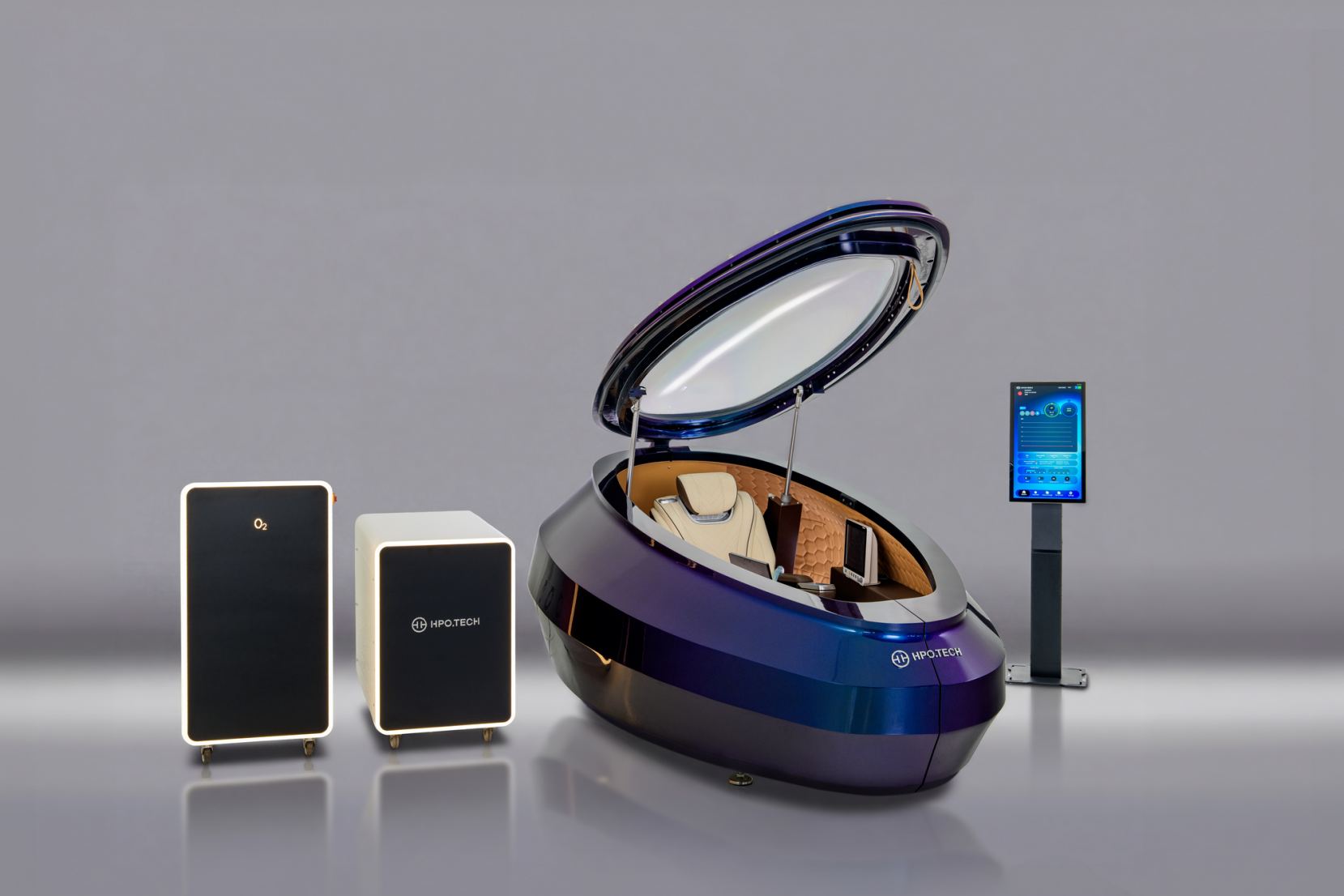
A new monoplace chamber that departs from the cylindrical pressure-vessel tradition, replacing it with an oval geometry, an upward-opening acrylic canopy, and an automatic reclining chair that adapts to seated or fully reclined use.
ISTANBUL - TelAve -- HPO.TECH has introduced OYSTER, a single-seat hyperbaric chamber built around a structural and visual break from the cylindrical vessels that have defined the category for more than a century. The system pairs HPO.TECH's medical-grade hyperbaric platform with an entirely new chassis: an oval, organic form sealed by a full acrylic dome that lifts upward to open the chamber.
OYSTER's defining feature is that canopy. Conventional chambers seat the user inside a steel cylinder fitted with side windows. OYSTER replaces the upper half of the vessel with a single curved acrylic shell, producing a hyperbaric environment with uninterrupted overhead visibility and no structural frame across the line of sight. The interior reads more as an open capsule than a sealed device.
The form takes its name from the shape it borrows. Like an oyster shell, the upper lid hinges cleanly away from the base, giving direct access to the interior without the narrow doorway and step-over of traditional designs. Inside, an automatic reclining chair moves between an upright seated position and a fully reclined one, allowing the user to settle into whichever posture suits the session.
More on TelAve News
"For more than a century, the design of pressure vessels has remained essentially unchanged," said Tolga Kabak, CTO and co-founder of HPO.TECH. "Most hyperbaric chambers are still cylindrical steel structures. With OYSTER, we set that history aside and asked what a chamber would look like if we designed it from scratch around the person inside, rather than around engineering convention. The acrylic dome is the most visible expression of that thinking, but the entire architecture follows from it."
OYSTER operates at 2.4 ATA on the technical platform HPO.TECH has refined across its existing range. Oxygen is delivered through the company's Built-In Breathing System (BIBS), with chamber management handled through an integrated touchscreen console. Pressure, oxygen concentration, temperature and humidity are monitored in real time, with support for preset clinical protocols, secure user profiles and live session logging. An optional in-chamber entertainment screen sits alongside the control and monitoring panels, available for operators who want to offer it as part of the session experience.
More on TelAve News
Customization options follow the same logic as the ZEUGMA family. Operators can specify exterior color, interior leather selection and logo integration, with additional freedom on the lower hull given the new geometry.
Safety provisions include a reinforced lower hull paired with a thick acrylic canopy engineered to operate safely at 2.4 ATA, emergency depressurization in 90 seconds, dual automated and manual control systems, a pressure relief valve, manual backup controls, and oxygen monitoring maintained at or below 21 percent ambient levels.
Founded in 2020 in Istanbul, HPO.TECH (www.hpotech.com) designs and builds hyperbaric and multibaric chamber systems for research, clinical, wellness and high-performance applications. The company is among the most certified manufacturers in the field, holding CE, MDR, UKCA, ASME PVHO, ASME U-Stamp, PED and ISO 13485 clearances across major international markets.
OYSTER's defining feature is that canopy. Conventional chambers seat the user inside a steel cylinder fitted with side windows. OYSTER replaces the upper half of the vessel with a single curved acrylic shell, producing a hyperbaric environment with uninterrupted overhead visibility and no structural frame across the line of sight. The interior reads more as an open capsule than a sealed device.
The form takes its name from the shape it borrows. Like an oyster shell, the upper lid hinges cleanly away from the base, giving direct access to the interior without the narrow doorway and step-over of traditional designs. Inside, an automatic reclining chair moves between an upright seated position and a fully reclined one, allowing the user to settle into whichever posture suits the session.
More on TelAve News
- Lansdowne Photographer Steven Weisz Selected for Philadelphia City Hall Exhibition
- Federal indictments bring new scrutiny to SPLC practices and highlight the real‑world impact of its designations on nonprofit groups, including NCFM
- Shedrack Anderson Releases New Album
- Could You Make a 2026 World Cup Squad? A New Free Tool Will Tell You Where You'd Sit on Any National Team's Bench in 90 Seconds
- Sugar Land's Social Scene Gets a Boost: Pep's Backyard Set to Open Near Constellation Field
"For more than a century, the design of pressure vessels has remained essentially unchanged," said Tolga Kabak, CTO and co-founder of HPO.TECH. "Most hyperbaric chambers are still cylindrical steel structures. With OYSTER, we set that history aside and asked what a chamber would look like if we designed it from scratch around the person inside, rather than around engineering convention. The acrylic dome is the most visible expression of that thinking, but the entire architecture follows from it."
OYSTER operates at 2.4 ATA on the technical platform HPO.TECH has refined across its existing range. Oxygen is delivered through the company's Built-In Breathing System (BIBS), with chamber management handled through an integrated touchscreen console. Pressure, oxygen concentration, temperature and humidity are monitored in real time, with support for preset clinical protocols, secure user profiles and live session logging. An optional in-chamber entertainment screen sits alongside the control and monitoring panels, available for operators who want to offer it as part of the session experience.
More on TelAve News
- Joseph Nybyk (AKA Joseph Neibich) Guests On Octopus TV
- Mutant-Fueled Bio-Cyberpunk Shooter HoverGrease 2 Launches May 22
- PairQueue Opens Android Pre-Registration Ahead of the Summer Theme Park Season
- Triple-Digit Growth, OTCQX Market Upgrade and a Rapidly Expanding Specialty Healthcare Platform: Cardiff Lexington Corporation: Stock Symbol: CDIX
- XRPPower Continues Strengthening Its Global AI-Powered Blockchain Ecosystem
Customization options follow the same logic as the ZEUGMA family. Operators can specify exterior color, interior leather selection and logo integration, with additional freedom on the lower hull given the new geometry.
Safety provisions include a reinforced lower hull paired with a thick acrylic canopy engineered to operate safely at 2.4 ATA, emergency depressurization in 90 seconds, dual automated and manual control systems, a pressure relief valve, manual backup controls, and oxygen monitoring maintained at or below 21 percent ambient levels.
Founded in 2020 in Istanbul, HPO.TECH (www.hpotech.com) designs and builds hyperbaric and multibaric chamber systems for research, clinical, wellness and high-performance applications. The company is among the most certified manufacturers in the field, holding CE, MDR, UKCA, ASME PVHO, ASME U-Stamp, PED and ISO 13485 clearances across major international markets.
Source: HPO TECH
0 Comments
Latest on TelAve News
- AI Is Closing the Gap Between Offshore Virtual Assistants and Onshore Staff
- CCHR Highlights Concerns Over Coercive and Failed $140 Billion Mental Health Practices at Psychiatric Convention
- Avery Headley Leads Major Stabilization and Modernization Initiative Across Bronx Affordable Housing Portfolio
- NewReputation's AI Sentiment Analysis Tool Reaches 2,500 Users as Businesses Demand Clearer Brand Intelligence
- CAPO Supply Announces Opening of Second Location in New Castle, Pennsylvania
- $224 Billion Growing Market in Life Settlements Presents Major Opportunity for New Policy Acquisition Business Plan: DLT Resolution Stock Symbol: DLTI
- Fyt-02 Launches on Kickstarter The Smart Sensor That Turns Any Chair Into a Posture & Movement Track
- YieldOMega Launches $DOUB Airdrop Campaign Ahead of TimeCurve Launch
- Kaltra Expands Microchannel Water Coil Line for U.S. HVAC Market With New Corrosion-Resistant Tube Technology
- Collectibles EvoRelic Celebrates Stellar 4.8-Star Customer Rating
- Phoenix Hip-hop Artist Rhymi Hits 23k Monthly Listeners 12 Days After Album Release
- Pediatrician Launches "Confessions of a Detective Doctor" Children's Book Series
- Integrated Maintenance Platforms Are Transforming Aircraft Operations
- T. Jones Group's Cameron Jones Serves as Judge for the 2026 CHBA National Awards for Housing Excellence
- Derek Advanced Tracking Systems Revolutionizes Asset Monitoring with Advanced Technology
- The AI Direction Deficit: TripleTen Study Finds Staff Get Told to Use AI — But Not Trained to Use It
- $29.8 Million Record Setting Q1 with Boosted Annual Guidance to $160 Million for Expanding Pre-Owned Boat Dealer: Off The Hook YS, Inc. N Y S E: OTH
- All About Technology Celebrates 25 Years of Bridging Detroit's Digital Divide
- iatroX surpasses 500,000 clinical queries and expands specialist exam coverage
- Inside-Out Hollywood: The Relentless Rise of Joseph Nybyk (AKA Joseph Neibich)