Popular on TelAve
- Oklahoma and Starlink Local Installers getting it done! / now offering digital menu board installs - 117
- Starlink Local Installers working with state of Minnesota (now offering digital menu board installs) - 107
- Phinge CEO Ranked #1 Globally by Crunchbase for the Last Week, Will Be in Las Vegas Jan. 4-9, the Week of CES to Discuss Netverse & IPO Coming in 2026
- Starlink Local Installers helping Wisconsin stay wired (now offering digital menu board installs)
- BEC Technologies Expands MX-220 5G Industrial Router Series for Edge Connectivity
- T-TECH Partners with Japan USA Precision Tools for 2026 US Market Development of the New T-TECH 5-Axis QUICK MILL™
- Star Sleep & Wellness Expands to Pearland, Texas — Bringing Life-Changing Sleep Care to More Communities
- Local Fiber Announces Graduation from Samsung Next Startup Program, Marks New Phase of Growth
- Kaufman Development Breaks Ground on Detroit Micro Data Center, Expanding Its National AI Platform
- America's Most Festive Garages Wanted for Garage.com's 2025 Holiday Contest
Similar on TelAve
- Robert DeMaio, Phinge Founder & CEO, Ranked #1 Globally on Crunchbase, Continues to Convert Previous Debt Owed to Him by Phinge into Convertible Notes
- 2025: A Turning Point for Human Rights. CCHR Demands End to Coercive Psychiatry
- The 22% Tax Reality: Finland's New Gambling Law Creates a "Fiscal Trap" for Grey Market Casino Players
- Phinge Founder & CEO Robert DeMaio Ranked #1 Globally on Crunchbase, Continues to Convert Previous Debt Owed to Him by Phinge into Convertible Notes
- A Well-Fed World, Youth Climate Save and PAN International Launch PHRESH: A Global Directory of Plant-Based Hunger Relief Organizations
- Guests Can Save 25 Percent Off Last Minute Bookings at KeysCaribbean's Village at Hawks Cay Villas
- Trump's Executive Order Rescheduling Cannabis: Accelerating M&A in a Multibillion-Dollar Industry
- Documentary "Prescription for Violence: Psychiatry's Deadly Side Effects" Premieres, Exposes Link Between Psychiatric Drugs and Acts of Mass Violence
- Nextvisit Co-Founder Ryan Yannelli Identifies Six Critical Factors for Behavioral Health Providers Evaluating AI Scribes in 2026
- Renowned Alternative Medicine Specialist Dr. Sebi and His African Bio Mineral Balance Therapy Are the Focus of New Book
Coalition and CCHR Call on FDA to Review Electroshock Device and Consider a Ban
TelAve News/10883211
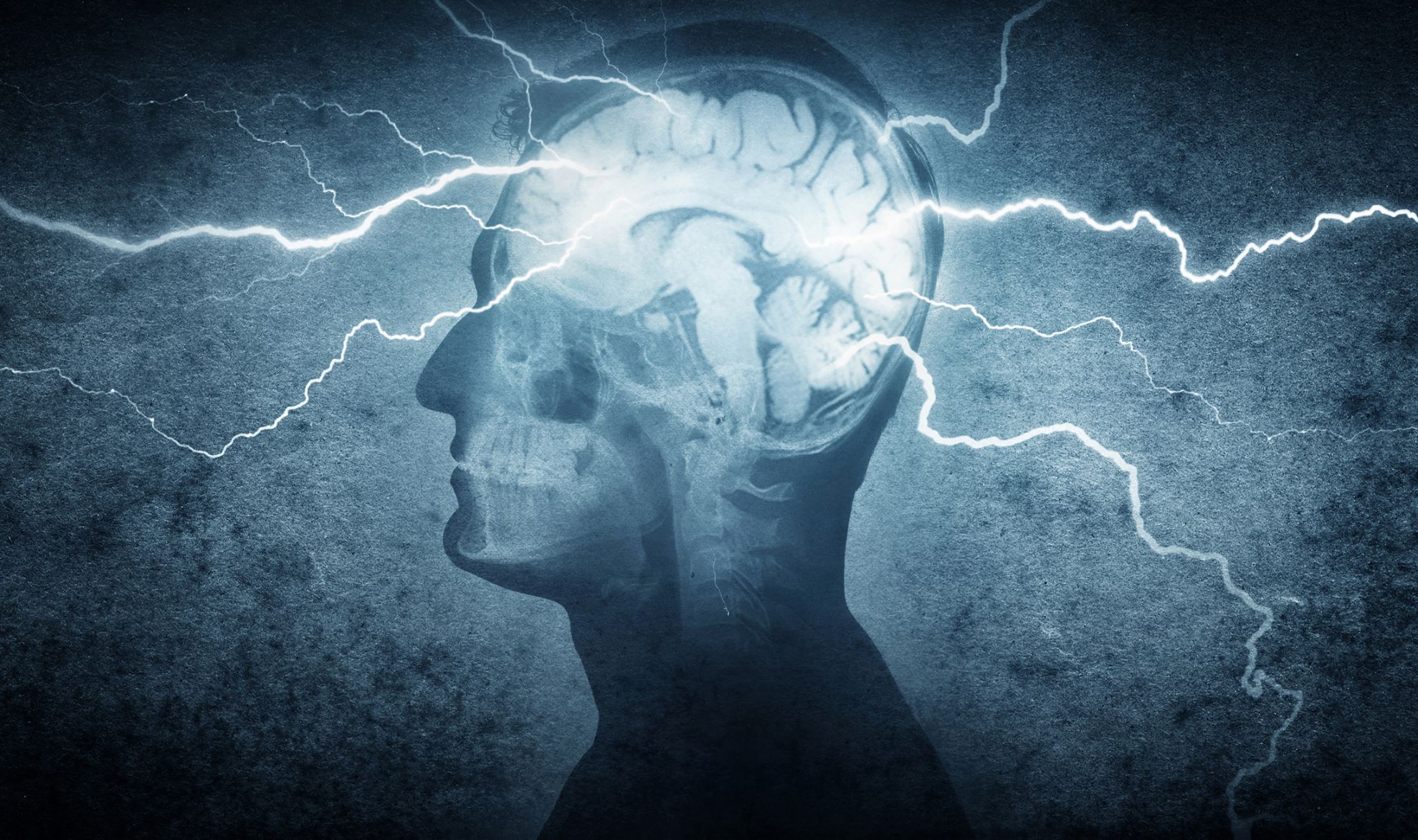
A national coalition of health and human rights organizations, attorneys, medical experts, and electroconvulsive therapy (ECT) survivors says the U.S. Food and Drug Administration's 2018 ECT rule is scientifically indefensible and places vulnerable Americans at risk.
LOS ANGELES - TelAve -- By CCHR International
The newly formed Stop ECT Coalition, representing hundreds of thousands of individuals, has launched a nationwide campaign urging review of the Food and Drug Administration (FDA)'s 2018 rule on electroconvulsive therapy (ECT) devices. Citizens Commission on Human Rights International (CCHR) is among the organizations supporting the initiative, along with the Global Wellness Forum and Stand for Health Freedom.
ECT delivers up to 460 volts of electricity through the brain to induce a grand mal seizure—yet psychiatrists concede that they do not know how the procedure "works." More than 80 years after its introduction, neither safety nor efficacy has been scientifically proven.
ECT devices were "grandfathered" into FDA regulation as Class III high-risk devices in 1976, bypassing modern requirements for Premarket Approval (PMA), which mandates clinical trials proving safety and effectiveness (SE). In 2018, the FDA down-classified ECT devices to moderate risk (Class II) for certain psychiatric indications, without knowing manufacturers had refused for decades to produce the necessary studies for a PMA and had no intention of doing so.
"The incorrect classification allowed ECT devices to be used on children as young as five, pregnant women, seniors, veterans, and other vulnerable persons," the Coalition states. "Involuntary use—which still occurs in some U.S. facilities—has been condemned by the United Nations and the World Health Organization as a human-rights abuse."
The UN Committee Against Torture has explicitly stated that involuntary ECT can constitute torture. Despite the FDA claiming that involuntary ECT in the U.S. is uncommon and requires court review in every state, legal analysis shows 33 states have no explicit ECT codes, and six states have no ECT laws at all.
Under 21 U.S.C. § 360f (Section 516 of the Federal Food, Drug, and Cosmetic Act), the FDA has authority to ban devices that pose an "unreasonable and substantial risk" of injury. The Coalition argues ECT clearly meets that standard, pointing to decades of documented neurological injury, memory loss, cognitive deficits, and deaths.
More on TelAve News
Although the FDA's rule applies only to a few indications in patients aged 13 and older, psychiatrists can prescribe ECT off-label for any disorder. The American Psychiatric Association (APA) even advocates ECT for children younger than 13.[1]
During its 2009–2010 review, the FDA relied on only 68 studies out of more than 1,160 relevant papers, excluding research documenting neurological injury. Of more than 3,000 public comments, 79% opposed lowering the device's risk classification.[2] The agency asserted that warning labels and informed consent would mitigate risk. Those labels include the warnings: "ECT device use may be associated with disorientation, confusion, and memory problems," and "The long-term safety and effectiveness of ECT treatment has not been demonstrated."[3]
At the FDA's 2011 public hearing, a senior academic declared that ECT would remain on the market regardless of evidence.[4] Days earlier, Dr. Matthew Rudorfer of the National Institute of Mental Health told The New York Times that manufacturers viewed required clinical trials as "too expensive."[5]
ECT's mechanism requires electrical current to disrupt brain function and trigger a generalized seizure. The FDA acknowledges other including burns, fractures, dental injury, prolonged seizures, cardiovascular complications, stroke, and death. "When the mechanism itself causes injury, disclosure cannot prevent it," said Jan Eastgate, president of CCHR International. "Consent forms document what was said—but cannot transform a destructive mechanism into a therapeutic one."
Whether Class II or Class III, the device's electrical output is identical. This raises fundamental contradictions: how can the same current be "moderate risk" for depression but "high risk" for other disorders? What biological mechanism allows electricity to differentiate between diagnoses? Experts call this regulatory fiction, not science.
Attorney Jonathan Emord wrote in his Citizen Petition: "The FDA has utterly ignored clear-cut evidence of brain damage, memory loss, and death resulting from ECT. ECT is barbaric and should be removed from the market." Supporting expert findings include Professor John Read, who concluded ECT offers no long-term benefit over placebo and can cause brain damage[6]; biomedical engineer Dr. Ken Castleman reporting that electrical current becomes heat as it passes through the brain, causing cell dysfunction or death; a 2018 California case in which a jury could reasonably conclude ECT causes brain damage, led a manufacturer to add warnings of "permanent brain damage"; and the Nebraska Supreme Court (2025) accepted testimony that ECT causes persistent or permanent memory loss and brain damage in up to 55% of recipients.[7]
More on TelAve News
International bodies have long condemned ECT use on minors. In 2005, the World Health Organization stated: "There are no indications for the use of ECT on minors; this should be prohibited through legislation." U.S. bans include California (1976) and Texas (1993). Western Australia prohibits ECT under age 14, while the Australian Capital Territory bans it under age 12. Yet the FDA dismissed the relevance of these bans.
The Stop ECT Coalition and CCHR urge the new FDA Commissioner and lawmakers to act where the agency has failed. Vulnerable Americans—including children, pregnant women, seniors, veterans, and involuntary patients—deserve protection from a device whose harms are intrinsic and irremediable. Visit StopECT.com to learn more and take action. Watch CCHR's documentary Therapy or Torture: The Truth About Electroshock.
Sources:
[1] Resource Document on the FDA Final Order to Reclassify ECT Devices, APA Feb. 2019
[2] emord.com/blawg/wp-content/uploads/2016/08/1-ECT-Citizen-Petition.pdf
[3] www.federalregister.gov/documents/2018/12/26/2018-27809/neurological-devices-reclassification-of-electroconvulsive-therapy-devices-effective-date-of
[4] wayback.archive-it.org/7993/20170114044023/http://www.fda.gov/downloads/AdvisoryCommittees/CommitteesMeetingMaterials/MedicalDevices/MedicalDevicesAdvisoryCommittee/NeurologicalDevicesPanel/UCM247595.pdf, pp. 435-436
[5] Duff Wilson, "F.D.A. Is Studying the Risk of Electroshock Devices," The New York Times, 23 Jan 2011, www.nytimes.com/2011/01/24/business/24shock.html
[6] www.bmj.com/content/364/bmj.k5233; www.dailymail.co.uk/news/article-6738197/Controversial-electric-shock-treatment-severe-depression-cause-permanent-brain-damage.html
[7] www.ctbar.org/docs/default-source/publications/connecticut-lawyer/ctl-vol-30/4-march-april-20/ctl-marapr-20—treatment-without-consent-cases.pdf
The newly formed Stop ECT Coalition, representing hundreds of thousands of individuals, has launched a nationwide campaign urging review of the Food and Drug Administration (FDA)'s 2018 rule on electroconvulsive therapy (ECT) devices. Citizens Commission on Human Rights International (CCHR) is among the organizations supporting the initiative, along with the Global Wellness Forum and Stand for Health Freedom.
ECT delivers up to 460 volts of electricity through the brain to induce a grand mal seizure—yet psychiatrists concede that they do not know how the procedure "works." More than 80 years after its introduction, neither safety nor efficacy has been scientifically proven.
ECT devices were "grandfathered" into FDA regulation as Class III high-risk devices in 1976, bypassing modern requirements for Premarket Approval (PMA), which mandates clinical trials proving safety and effectiveness (SE). In 2018, the FDA down-classified ECT devices to moderate risk (Class II) for certain psychiatric indications, without knowing manufacturers had refused for decades to produce the necessary studies for a PMA and had no intention of doing so.
"The incorrect classification allowed ECT devices to be used on children as young as five, pregnant women, seniors, veterans, and other vulnerable persons," the Coalition states. "Involuntary use—which still occurs in some U.S. facilities—has been condemned by the United Nations and the World Health Organization as a human-rights abuse."
The UN Committee Against Torture has explicitly stated that involuntary ECT can constitute torture. Despite the FDA claiming that involuntary ECT in the U.S. is uncommon and requires court review in every state, legal analysis shows 33 states have no explicit ECT codes, and six states have no ECT laws at all.
Under 21 U.S.C. § 360f (Section 516 of the Federal Food, Drug, and Cosmetic Act), the FDA has authority to ban devices that pose an "unreasonable and substantial risk" of injury. The Coalition argues ECT clearly meets that standard, pointing to decades of documented neurological injury, memory loss, cognitive deficits, and deaths.
More on TelAve News
- Phinge Founder & CEO Robert DeMaio Ranked #1 Globally on Crunchbase, Continues to Convert Previous Debt Owed to Him by Phinge into Convertible Notes
- Donna Cardellino Manager/Facilitator Signs Justin Jeansonne Country Singer-Songwriter To Exclusive Management Deal For Global Music Expansion
- Golden Paper Launches a New Chapter in Its Americas Strategy- EXPOPRINT Latin America 2026 in Brazil
- UK Financial Ltd Executes Compliance Tasks Ahead Of First-Ever ERC-3643 Exchange-Traded Token, SMCAT & Sets Date For Online Investor Governance Vote
- TheOneLofi2: New Home for Chill Lo-Fi Hip Hop Beats Launches on YouTube
Although the FDA's rule applies only to a few indications in patients aged 13 and older, psychiatrists can prescribe ECT off-label for any disorder. The American Psychiatric Association (APA) even advocates ECT for children younger than 13.[1]
During its 2009–2010 review, the FDA relied on only 68 studies out of more than 1,160 relevant papers, excluding research documenting neurological injury. Of more than 3,000 public comments, 79% opposed lowering the device's risk classification.[2] The agency asserted that warning labels and informed consent would mitigate risk. Those labels include the warnings: "ECT device use may be associated with disorientation, confusion, and memory problems," and "The long-term safety and effectiveness of ECT treatment has not been demonstrated."[3]
At the FDA's 2011 public hearing, a senior academic declared that ECT would remain on the market regardless of evidence.[4] Days earlier, Dr. Matthew Rudorfer of the National Institute of Mental Health told The New York Times that manufacturers viewed required clinical trials as "too expensive."[5]
ECT's mechanism requires electrical current to disrupt brain function and trigger a generalized seizure. The FDA acknowledges other including burns, fractures, dental injury, prolonged seizures, cardiovascular complications, stroke, and death. "When the mechanism itself causes injury, disclosure cannot prevent it," said Jan Eastgate, president of CCHR International. "Consent forms document what was said—but cannot transform a destructive mechanism into a therapeutic one."
Whether Class II or Class III, the device's electrical output is identical. This raises fundamental contradictions: how can the same current be "moderate risk" for depression but "high risk" for other disorders? What biological mechanism allows electricity to differentiate between diagnoses? Experts call this regulatory fiction, not science.
Attorney Jonathan Emord wrote in his Citizen Petition: "The FDA has utterly ignored clear-cut evidence of brain damage, memory loss, and death resulting from ECT. ECT is barbaric and should be removed from the market." Supporting expert findings include Professor John Read, who concluded ECT offers no long-term benefit over placebo and can cause brain damage[6]; biomedical engineer Dr. Ken Castleman reporting that electrical current becomes heat as it passes through the brain, causing cell dysfunction or death; a 2018 California case in which a jury could reasonably conclude ECT causes brain damage, led a manufacturer to add warnings of "permanent brain damage"; and the Nebraska Supreme Court (2025) accepted testimony that ECT causes persistent or permanent memory loss and brain damage in up to 55% of recipients.[7]
More on TelAve News
- eJoule Inc Participates in Silicon Dragon CES 2026
- HBZBZL Unveils "Intelligent Ecosystem" Strategy: Integrating AI Analytics with Web3 Incubation
- Kaltra Launches Next-Gen MCHEdesign With Full Integration Into MCHEselect — Instant Simulation & Seamless Microchannel Coil Workflow
- A Well-Fed World, Youth Climate Save and PAN International Launch PHRESH: A Global Directory of Plant-Based Hunger Relief Organizations
- Guests Can Save 25 Percent Off Last Minute Bookings at KeysCaribbean's Village at Hawks Cay Villas
International bodies have long condemned ECT use on minors. In 2005, the World Health Organization stated: "There are no indications for the use of ECT on minors; this should be prohibited through legislation." U.S. bans include California (1976) and Texas (1993). Western Australia prohibits ECT under age 14, while the Australian Capital Territory bans it under age 12. Yet the FDA dismissed the relevance of these bans.
The Stop ECT Coalition and CCHR urge the new FDA Commissioner and lawmakers to act where the agency has failed. Vulnerable Americans—including children, pregnant women, seniors, veterans, and involuntary patients—deserve protection from a device whose harms are intrinsic and irremediable. Visit StopECT.com to learn more and take action. Watch CCHR's documentary Therapy or Torture: The Truth About Electroshock.
Sources:
[1] Resource Document on the FDA Final Order to Reclassify ECT Devices, APA Feb. 2019
[2] emord.com/blawg/wp-content/uploads/2016/08/1-ECT-Citizen-Petition.pdf
[3] www.federalregister.gov/documents/2018/12/26/2018-27809/neurological-devices-reclassification-of-electroconvulsive-therapy-devices-effective-date-of
[4] wayback.archive-it.org/7993/20170114044023/http://www.fda.gov/downloads/AdvisoryCommittees/CommitteesMeetingMaterials/MedicalDevices/MedicalDevicesAdvisoryCommittee/NeurologicalDevicesPanel/UCM247595.pdf, pp. 435-436
[5] Duff Wilson, "F.D.A. Is Studying the Risk of Electroshock Devices," The New York Times, 23 Jan 2011, www.nytimes.com/2011/01/24/business/24shock.html
[6] www.bmj.com/content/364/bmj.k5233; www.dailymail.co.uk/news/article-6738197/Controversial-electric-shock-treatment-severe-depression-cause-permanent-brain-damage.html
[7] www.ctbar.org/docs/default-source/publications/connecticut-lawyer/ctl-vol-30/4-march-april-20/ctl-marapr-20—treatment-without-consent-cases.pdf
Source: Citizens Commission on Human Rights International
0 Comments
Latest on TelAve News
- Beycome Closes $2.5M Seed Round Led by InsurTech Fund
- Tru by Hilton Columbia South Opens to Guests
- Christy Sports donates $56K in new gear to SOS Outreach to help kids hit the slopes
- "BigPirate" Sets Sail: A New Narrative-Driven Social Casino Adventure
- Phinge CEO Ranked #1 Globally by Crunchbase for the Last Week, Will Be in Las Vegas Jan. 4-9, the Week of CES to Discuss Netverse & IPO Coming in 2026
- Women's Everyday Safety Is Changing - The Blue Luna Shows How
- Microgaming Unveils Red Papaya: A New Studio Delivering Cutting-Edge, Feature-Rich Slots
- 5-Star Duncan Injury Group Expands Personal Injury Representation to Arizona
- The End of "Influencer" Gambling: Bonusetu Analyzes Finland's Strict New Casino Marketing Laws
- AI-Driven Cybersecurity Leader Gains Industry Recognition, Secures $6M Institutional Investment, Builds Momentum Toward $16M Annual Run-Rate Revenue
- TRIO Heating, Air & Plumbing Now Ranks #1 in San Jose
- Milwaukee Job Corps Center Hosts Alumni Day, Calls Alumni to Action on Open Enrollment Campaign
- Golden Paper Identifies Global Growth in Packaging Papers and Upgrades Its High-End Production Capacity
- Champagne, Caviar Bumps & Pole Performances — Welcome the New Year Early with HandPicked Social Club
- A New Soul Album: Heart Of Kwanzaa, 7-Day Celebration
- Allegiant Management Group Named 2025 Market Leader in Orlando by PropertyManagement.com
- NAFMNP Awarded USDA Cooperative Agreement to Continue MarketLink Program Under FFAB
- Costa Oil - 10 Minute Oil Change Surpasses 70 Locations with Construction of San Antonio, TX Stores — Eyes Growth Via Acquisition or Being Acquired
- LaTerra and Respark Under Contract with AIMCO to Acquire a $455M, 7-Property Chicago Multifamily Portfolio
- Record Revenue, Tax Tailwinds, and AI-Driven Scale: Why Off The Hook YS Inc. Is Emerging as a Standout in the $57 Billion U.S. Marine Market