Popular on TelAve
- Still Using Ice? FrostSkin Reinvents Hydration
- OneVizion Announces Next Phase of Growth as Brad Kitchens Joins Board of Directors
- Nest Finders Property Management Named #1 in Jacksonville and Ranked #99 Nationwide
- Half of Finnish Online Gambling Expenditure Now Flows to Offshore Instant Casinos as License Applications Open March 1, 2026
- Inkdnylon Simplifies Digitizing and Vector Art Nationwide With Clear Pricing and Guided File Support
- Market Value Enhancement From 2 Important New US Patents Issued for Strengthening Hair Enzyme Booster Technology to Caring Brands (NAS DAQ: CABR)
- EPP Pricing Platform announces leadership transition to support long-term growth and continuity
- P‑Wave Classics Launches Definitive New Edition of Hannah Webster Foster's The Coquette
- Luxury Lake-View Home Launches in Kissimmee's Bellalago community, Offering Privacy, Space, and Florida Resort-Style Living
- purelyIV Expands Concierge Wellness Platform with New IV Therapies, Memberships, and Digital Experience
Similar on TelAve
- New Environmental Thriller "The Star Thrower" Reimagines a Classic Lesson in Individual Impact
- Summit Appoints Javier Cabeza as Data, AI, and Analytics Practice Lead
- Cancun Airport Transportation Expands Fleet Ahead of Record Passenger Growth at Cancun International Airport
- CCHR: While Damaging Antipsychotics Win Approval, Proven Non-Drug Alternatives Remain Ignored
- Arcuri Group Announces Long‑Term Partnership with WakeMed Health & Hospitals to Deliver Situational Awareness and De‑escalation Training
- At 25, She Became One of the Youngest AAPI Female Founders to Win One of the World's Most Prestigious Design Awards for a Lamp That Makes You Smile
- Juego Studios Extends Full-Cycle Game Development & Outsourcing Capabilities to the UAE Market
- VENUS Goes Live on CATEX Exchange As UK Financial Ltd Activates The Premier Division Of The Maya Meme's League
- Atlanta Tech Founder Seeks Clarity on Intellectual Property and Innovation Policy
- Special Alert: Undervalued Opportunity: IQSTEL (N A S D A Q: IQST) Positioned for Explosive Multi-Year Growth
How California Convinces Buyers Not to Purchase New Cars — and How This Hurts Dealers
TelAve News/10881999
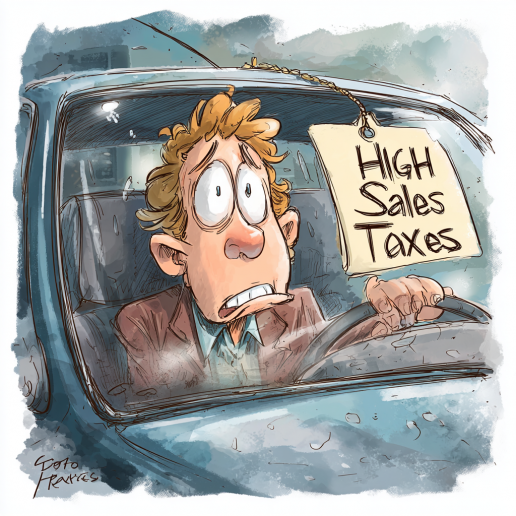
U.S. Congressional Candidate Peter Coe Verbica Explains How California's Punitive Tax Structure Is Driving Consumers — and Revenue — Out of the State
BAY AREA, Calif. & SANTA CRUZ, Calif. & MONTEREY, Calif. & SAN LUIS OBISPO, Calif. - TelAve -- Have you ever met someone who moved away from California simply because of DMV fees? I have — and it's not hard to see why. Depending on the county, registration fees on a $60,000 vehicle can approach $940 (and that's before sales taxes, dealer fees, and mandatory add-ons).
For a family living paycheck-to-paycheck, that's not a minor nuisance. If a household owns three vehicles, their annual DMV burden alone could exceed a month's rent in many parts of the country.
And that's just one piece of the puzzle.
Californians already face the nation's highest gasoline taxes, some of the highest base prices due to reformulated fuel requirements, and a regulatory climate that raises the cost of nearly everything involved in transportation. But none of these are the real barrier that stops families, retirees, gig workers, and small business owners from buying a new car.
The real stumbling block — the one that freezes the entire purchase decision — is California's sales tax system.
I drive a Lincoln MKZ Hybrid with 130,000 miles on it. It has been a faithful companion through campaigns, commutes, and countless meetings. By any reasonable measure, I could justify buying a new vehicle. But I won't — not in California's current policy environment. And I'm not alone. Across our state, families, retirees, gig workers, and small business owners are quietly making the same decision: not to buy.
Why? Because California has created one of the most punitive cost structures for vehicle ownership in the nation. What used to be a straightforward purchase has become an intricate dance with sales taxes, registration fees, regulatory hurdles, and "use-tax" traps that hit honest consumers with a bill they never saw coming.
The "Punishment" for Buying a Car
Let's be candid: California has turned new vehicles — especially modest luxury or hybrid models — into a tax event rather than a transportation decision.
More on TelAve News
When a consumer buys a car in California, they simultaneously trigger:
That's not "supporting green transportation." That's discouraging mobility.
The Absurdity of Deterring Responsible Buyers
In my case, I considered upgrading. As a candidate for U.S. Congress, I drive thousands of miles across Santa Clara, Santa Cruz, Monterey, and San Luis Obispo counties. A newer, fresher vehicle would be a rational choice.
But I chose not to buy one — and not because I lack the means.
My MKZ Hybrid is running beautifully. It should easily reach 180,000 to 200,000 miles. Even if the hybrid battery eventually needs replacement — an estimated $3,000–$4,000 expense — that is dramatically cheaper and more practical than handing the State of California an additional $8,000+ in taxes and fees simply for choosing to upgrade responsibly.
This isn't frugality. It's rational behavior in the face of irrational government incentives.
The Deadweight Loss: When Taxes Become So High They Reduce Revenue
Classical economics teaches us about deadweight loss — the idea that when taxes or costs become excessively high, individuals simply stop buying. Everyone loses:
Walk into a dealership anywhere from Los Gatos to Salinas and ask managers about foot traffic. Ask them about the slowdown. Ask them how many qualified buyers are delaying purchases purely due to the cost structure created in Sacramento.
California's policies don't just hurt wealthy buyers; they hurt the middle class, working families, car dealerships, union mechanics, and local tax bases. It's a perverse incentive structure that tells consumers:
More on TelAve News
"If you're smart, you won't buy here."
And many are listening.
The Ripple Effect on Local Dealerships
Dealerships are often multigenerational family businesses. They employ:
This is not environmental policy.
This is not consumer protection.
This is a politically engineered choke point on mobility and commerce.
When Government Becomes the Barrier, Not the Bridge
A government should encourage responsible purchasing — not punish it. It should incentivize:
I would love to support a local dealership. I would love the benefits of a fresher hybrid or EV. But until Sacramento stops treating middle- and upper-middle-income buyers as walking revenue units, I will keep my MKZ Hybrid running for another 50,000–70,000 miles. And I suspect hundreds of thousands of Californians will do the same.
A Better Way Forward
California needs a policy environment where:
The State of California may have forgotten how everyday economics works. But the voters haven't.
— Peter Coe Verbica
U.S. Congressional Candidate
Santa Clara • Santa Cruz • Monterey • San Luis Obispo Counties
Interested in making a difference? Support Verbica's campaign and help him fight for you in California and DC: Support - Verbica for Congress
(Image source: Midjourney 2025 with inputs by P. Verbica.)
For more information: www.peterverbica.com
Paid for by Verbica for Congress.
For a family living paycheck-to-paycheck, that's not a minor nuisance. If a household owns three vehicles, their annual DMV burden alone could exceed a month's rent in many parts of the country.
And that's just one piece of the puzzle.
Californians already face the nation's highest gasoline taxes, some of the highest base prices due to reformulated fuel requirements, and a regulatory climate that raises the cost of nearly everything involved in transportation. But none of these are the real barrier that stops families, retirees, gig workers, and small business owners from buying a new car.
The real stumbling block — the one that freezes the entire purchase decision — is California's sales tax system.
I drive a Lincoln MKZ Hybrid with 130,000 miles on it. It has been a faithful companion through campaigns, commutes, and countless meetings. By any reasonable measure, I could justify buying a new vehicle. But I won't — not in California's current policy environment. And I'm not alone. Across our state, families, retirees, gig workers, and small business owners are quietly making the same decision: not to buy.
Why? Because California has created one of the most punitive cost structures for vehicle ownership in the nation. What used to be a straightforward purchase has become an intricate dance with sales taxes, registration fees, regulatory hurdles, and "use-tax" traps that hit honest consumers with a bill they never saw coming.
The "Punishment" for Buying a Car
Let's be candid: California has turned new vehicles — especially modest luxury or hybrid models — into a tax event rather than a transportation decision.
More on TelAve News
- Cancun Airport Transportation Expands Fleet Ahead of Record Passenger Growth at Cancun International Airport
- Tobu Group's "T-home Series" of Accommodations in Tokyo Just Opened "T-home KEI."
- Custom Wooden Token Manufacturer Celebrates 10 Years of Helping Brands Stay Top of Mind
- NaturismRE Launches the NRE Health Institute to Advance Evidence-Informed Public Health Research
- P-Wave Classics to publish Robert Bage's Hermsprong in three volumes, beginning 12 May
When a consumer buys a car in California, they simultaneously trigger:
- Some of the highest sales tax rates statewide
- Steep registration and licensing fees
- Regulatory costs unique to California
- Insurance premiums inflated by the overall cost environment
That's not "supporting green transportation." That's discouraging mobility.
The Absurdity of Deterring Responsible Buyers
In my case, I considered upgrading. As a candidate for U.S. Congress, I drive thousands of miles across Santa Clara, Santa Cruz, Monterey, and San Luis Obispo counties. A newer, fresher vehicle would be a rational choice.
But I chose not to buy one — and not because I lack the means.
My MKZ Hybrid is running beautifully. It should easily reach 180,000 to 200,000 miles. Even if the hybrid battery eventually needs replacement — an estimated $3,000–$4,000 expense — that is dramatically cheaper and more practical than handing the State of California an additional $8,000+ in taxes and fees simply for choosing to upgrade responsibly.
This isn't frugality. It's rational behavior in the face of irrational government incentives.
The Deadweight Loss: When Taxes Become So High They Reduce Revenue
Classical economics teaches us about deadweight loss — the idea that when taxes or costs become excessively high, individuals simply stop buying. Everyone loses:
- The consumer, who is priced out.
- The business, which loses the sale.
- The government, which ironically collects less revenue than if it kept taxes reasonable.
Walk into a dealership anywhere from Los Gatos to Salinas and ask managers about foot traffic. Ask them about the slowdown. Ask them how many qualified buyers are delaying purchases purely due to the cost structure created in Sacramento.
California's policies don't just hurt wealthy buyers; they hurt the middle class, working families, car dealerships, union mechanics, and local tax bases. It's a perverse incentive structure that tells consumers:
More on TelAve News
- Progressive Dental & The Closing Institute Partner with Zest Dental Solutions to Elevate Full-Arch Growth and Patient Outcomes
- CCHR: While Damaging Antipsychotics Win Approval, Proven Non-Drug Alternatives Remain Ignored
- Arcuri Group Announces Long‑Term Partnership with WakeMed Health & Hospitals to Deliver Situational Awareness and De‑escalation Training
- At 25, She Became One of the Youngest AAPI Female Founders to Win One of the World's Most Prestigious Design Awards for a Lamp That Makes You Smile
- Juego Studios Extends Full-Cycle Game Development & Outsourcing Capabilities to the UAE Market
"If you're smart, you won't buy here."
And many are listening.
The Ripple Effect on Local Dealerships
Dealerships are often multigenerational family businesses. They employ:
- Salespeople
- Service technicians
- Detailers
- Administrative staff
- Finance workers
This is not environmental policy.
This is not consumer protection.
This is a politically engineered choke point on mobility and commerce.
When Government Becomes the Barrier, Not the Bridge
A government should encourage responsible purchasing — not punish it. It should incentivize:
- Cleaner vehicles
- Safe vehicles
- Efficient vehicles
- Local commerce
I would love to support a local dealership. I would love the benefits of a fresher hybrid or EV. But until Sacramento stops treating middle- and upper-middle-income buyers as walking revenue units, I will keep my MKZ Hybrid running for another 50,000–70,000 miles. And I suspect hundreds of thousands of Californians will do the same.
A Better Way Forward
California needs a policy environment where:
- Moderate, reasonable taxes encourage purchases rather than suppress them
- Hybrid and EV buyers are not penalized with contradictory fee structures
- Consumers can upgrade without fearing hidden penalties
- Dealerships can thrive again
- Families aren't pushed into keeping aging vehicles simply to avoid government overreach
The State of California may have forgotten how everyday economics works. But the voters haven't.
— Peter Coe Verbica
U.S. Congressional Candidate
Santa Clara • Santa Cruz • Monterey • San Luis Obispo Counties
Interested in making a difference? Support Verbica's campaign and help him fight for you in California and DC: Support - Verbica for Congress
(Image source: Midjourney 2025 with inputs by P. Verbica.)
For more information: www.peterverbica.com
Paid for by Verbica for Congress.
Source: Verbica for Congress
0 Comments
Latest on TelAve News
- Dr. Nadene Rose Releases Moving Memoir on Faith, Grief, and Divine Presence
- Gigasoft Solves AI's Biggest Charting Code Problem: Hallucinated Property Names
- ASTI Ignites the Space Economy: Powering SpaceX's NOVI AI Pathfinder with Breakthrough Solar Technology: Ascent Solar Technologies (N A S D A Q: ASTI)
- Hiring has reached a "Digital Stalemate"—Now, an ex-Google recruiter is giving candidates the answers
- 2026 Pre-Season Testing Confirms a Two-Tier Grid as Energy Management Defines Formula 1's New Era
- Platinum Car Audio LLC Focuses on Customer-Driven Vehicle Audio and Electronics Solutions
- Postmortem Pathology Expands Independent Autopsy Services in Kansas City
- Postmortem Pathology Expands Independent Autopsy Services Across Colorado
- $38 Million in U.S. Government Contract Awards Secured Through Strategic Partner. Establishing Multi-Year Defense Revenue Platform Through 2032: $BLIS
- Mecpow M1: A Safe & Affordable Laser Engraver Built for Home DIY Beginners
- CrashStory.com Launches First Colorado Crash Data Platform Built for Victims, Not Lawyers
- Inkdnylon Earns BBB Accreditation for Verified Business Integrity
- Josh Stout "The Western Project"
- Open House Momentum Builds at Heritage at South Brunswick
- A Celebration of Visibility, Voice and Excellence: The 57th NAACP Image Awards Golf Invitational, Presented by Wells Fargo, A PGD Global Production
- Athens in Spring: A Culinary City Break That Rivals Paris and Copenhagen
- ClearSight Therapeutics Signs LOI with Covalent Medical for $60M Multi-Channel OTC Eye Care Partnership
- Jayne Williams Joins Century Fasteners Corp. Sales and Business Development Team
- Rocket Fibre Services Growing Customer Base With netElastic Networking Software
- Cummings Graduate Institute for Behavioral Health Studies Honors New Doctor of Behavioral Health Graduates