Popular on TelAve
- Still Using Ice? FrostSkin Reinvents Hydration
- OneVizion Announces Next Phase of Growth as Brad Kitchens Joins Board of Directors
- Inkdnylon Simplifies Digitizing and Vector Art Nationwide With Clear Pricing and Guided File Support
- Market Value Enhancement From 2 Important New US Patents Issued for Strengthening Hair Enzyme Booster Technology to Caring Brands (NAS DAQ: CABR)
- Nest Finders Property Management Named #1 in Jacksonville and Ranked #99 Nationwide
- Georgia's Lanier Islands Resort Tees Up for a New Era of Golf in Spring 2026
- Half of Finnish Online Gambling Expenditure Now Flows to Offshore Instant Casinos as License Applications Open March 1, 2026
- Kaltra Expands Microchannel Innovation to Deliver Lower Refrigerant Charge
- Openchannelflow Wins Web Excellence Award for Outstanding Digital Experience
- Roblox and Solsten Alliances; a Stronger Balance Sheet and Accelerated Growth Through AI, Gaming, and Strategic Partnerships for Super League: $SLE
Similar on TelAve
- Inkdnylon Earns BBB Accreditation for Verified Business Integrity
- IDpack v4 Launches: A Major Evolution in Cloud-Based ID Card Issuance
- CCHR Says Psychiatry's Admission on Antidepressant Withdrawal Comes Far Too Late
- 505 Plumbing, Heating & Cooling Launches in Albuquerque, Bringing a Customer-First Approach to Home Services
- AOW Event Sponsored By The Stanglwirt Resort a renowned five-star Austrian wellness destination
- Integris Composites developing armor for military in Arctic Circle
- Workplace safety ideas from the front lines to highlight Applied Ergonomics Conference in Arlington, Texas
- UK Financial Ltd Sets February 27 CATEX Debut for VENUS Coin, Opening Limited Early Access Through MayaPro Wallet
- Ice Melts. Infrastructure Fails. What Happens to Clean Water?
- Delay In Federal Disaster Assistance Causing Failure Of Small Business In Disaster Areas
Protecting What Makes Monterey Bay Unique
TelAve News/10889207
Why Electing Peter Coe Verbica to Congress Matters for California
MONTEREY, Calif. & SANTA CRUZ, Calif. & BAY AREA, Calif. & SAN LUIS OBISPO, Calif. - TelAve -- Science-Based Stewardship — Not Political Theater
Monterey Bay is one of the most extraordinary ecological regions in the world. The Monterey Bay National Marine Sanctuary safeguards one of North America's richest marine ecosystems. Henry Cowell Redwoods State Park, The Forest of Nisene Marks, Wilder Ranch, and our coastal bluffs represent generations of conservation that balanced preservation with public access. Our coastline, redwood forests, agricultural valleys, and watersheds are not abstractions — they are living systems that define who we are.
Peter Coe Verbica understands both the sacred value of the outdoors — his family donated the heart of Henry Coe State Park — and the equally sacred responsibility families carry to provide for their loved ones. He believes protecting nature and protecting working families are not competing priorities, but complementary obligations. Now we have an opportunity to put that perspective to work by electing him to the U.S. House of Representatives in District 19.
For too long, our environmental policy has been driven by symbolism instead of science, by mandates instead of engineering, and by rhetoric instead of results.
Energy Without Engineering Is Risk
Renewables are being marketed as a complete solution when they are only one part of a complex grid. Intermittent generation, inadequate storage, and fragile transmission planning have already exposed weaknesses. Climate ambition requires engineering discipline — which means predictable, baseline power.
Wind infrastructure carries real tradeoffs:
Solar expansion has required massive battery deployment and converts large swaths of valuable land into permanent industrial sites. Monterey County hosts one of the nation's clearest warnings: Moss Landing.
More on TelAve News
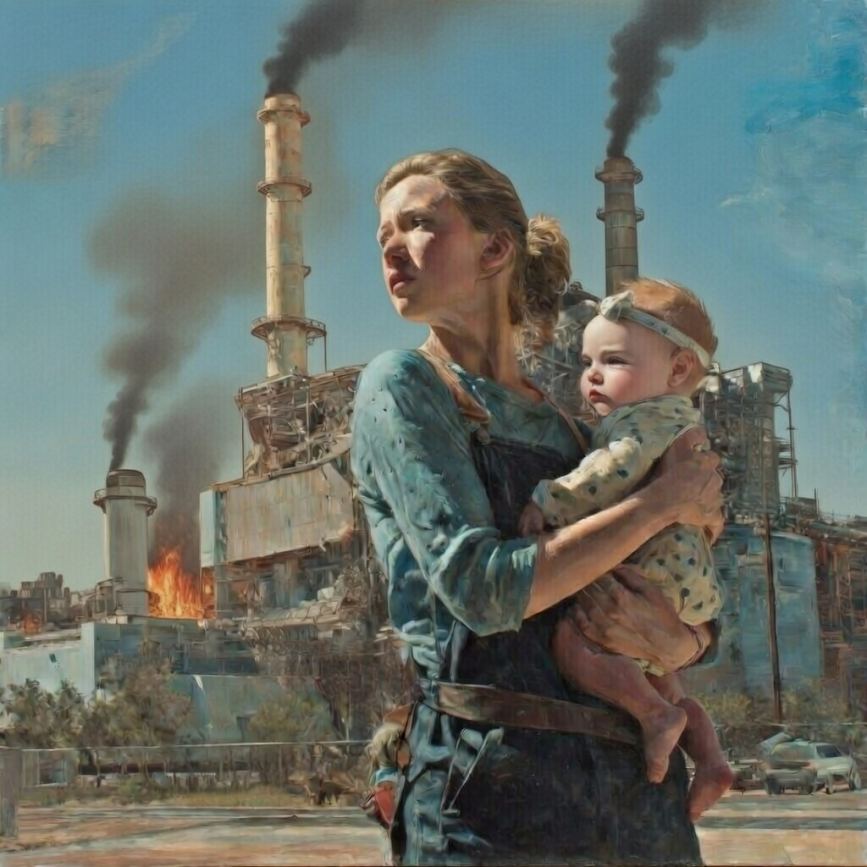
When the Moss Landing battery facility caught fire, local families didn't debate energy policy — they evacuated. One young mother packed her newborn into the car, uncertain what the smoke contained or how long it would linger. That moment exposed the gap between environmental ambition and engineering discipline — and raised a simple question: were these risks fully accounted for?
Public reporting confirms that in January 2025 a major fire at the Moss Landing battery storage facility led to emergency response measures, temporary road closures, and evacuations in surrounding areas. Earlier thermal incidents at the site and nearby installations also prompted safety reviews and operational shutdowns.
Battery storage carries fire risk, toxic release potential, and disposal challenges — especially near sensitive coastal and agricultural zones.
This is not opposition to clean energy. It is a demand for accountability.
Congestion Is Not Climate Policy
Highway 1 and Highway 101 congestion continues to increase idle time and localized emissions. Overlapping permitting requirements and administrative inefficiencies have stretched Highway 1 construction timelines, prolonging disruption for commuters and local businesses.
Restricting general lane capacity while expanding commuter (HOV) lanes that sit underutilized worsens bottlenecks. Vehicles idle longer. Emissions rise.
Bike lane configurations that restrict efficient right turns or extend signal cycles increase intersection congestion and concentrated pollution.
Environmental transportation policy should reduce fuel waste — not institutionalize inefficiency.
Housing Policy Driving Carbon Output
Coastal housing restrictions have displaced workforce families inland. Teachers, nurses, and service workers now commute farther. Hybrid employees still travel long corridors.
Vehicle miles traveled increase. Emissions increase.
Housing policy is climate policy. Blocking workforce housing near employment centers shifts environmental costs onto highways and working families.
That is not sustainability. It is displacement.
Voters Approved Water Storage. It Wasn't Built.
California voters approved billions in water bonds. Yet storage expansion has lagged.
Salinas Valley agriculture increasingly relies on groundwater pumping. Aquifers strain. Saltwater intrusion risks grow.
More on TelAve News
Regulation without infrastructure shifts stress rather than solving scarcity.
Water storage is environmental infrastructure. Failing to build it is not conservation — it is negligence.
Wildfire: The Carbon Nobody Counts
Wildfires release massive carbon emissions in single events — wiping out years of incremental reductions.
Fuel accumulation, insufficient thinning, limited prescribed burns, and inadequate water infrastructure intensify fire severity.
Forest science supports active management. Avoiding fuel reduction in the name of preservation has increased danger.
Megafires are not accidents. They are the predictable outcome of policies that ignore systems science.
Watersheds Under Strain
In Santa Cruz County, unmanaged encampments have formed near sensitive watershed areas.
Environmental impacts include:
Compassion without structure harms both people and ecosystems. Protecting vulnerable individuals must include protecting vulnerable watersheds.
The Record Speaks
Under current incumbents:
It requires engineering. Infrastructure. Lifecycle analysis. Supply chain resilience. Measurable results.
Monterey Bay deserves leadership that protects our sanctuary waters, our redwood forests, our agricultural valleys, and our families — with policies grounded in science and accountability.
The choice is not between environmental protection and economic vitality.
The choice is between political inertia and disciplined stewardship.
It is time for a new way of thinking — rooted in fact, science, and responsibility — to protect what makes Monterey Bay unique.
Let's elect Pete Verbica to the U.S. House of Representatives and bring science-based environmental leadership to District 19.
Disclaimer: This image is a conceptual illustration used for representational purposes only. It does not depict an actual person, specific evacuation, or documented scene from the Moss Landing battery incidents, but reflects broader community safety concerns.
Paid for by Verbica for Congress.
Monterey Bay is one of the most extraordinary ecological regions in the world. The Monterey Bay National Marine Sanctuary safeguards one of North America's richest marine ecosystems. Henry Cowell Redwoods State Park, The Forest of Nisene Marks, Wilder Ranch, and our coastal bluffs represent generations of conservation that balanced preservation with public access. Our coastline, redwood forests, agricultural valleys, and watersheds are not abstractions — they are living systems that define who we are.
Peter Coe Verbica understands both the sacred value of the outdoors — his family donated the heart of Henry Coe State Park — and the equally sacred responsibility families carry to provide for their loved ones. He believes protecting nature and protecting working families are not competing priorities, but complementary obligations. Now we have an opportunity to put that perspective to work by electing him to the U.S. House of Representatives in District 19.
For too long, our environmental policy has been driven by symbolism instead of science, by mandates instead of engineering, and by rhetoric instead of results.
Energy Without Engineering Is Risk
Renewables are being marketed as a complete solution when they are only one part of a complex grid. Intermittent generation, inadequate storage, and fragile transmission planning have already exposed weaknesses. Climate ambition requires engineering discipline — which means predictable, baseline power.
Wind infrastructure carries real tradeoffs:
- Bird and bat mortality
- Offshore construction noise affecting marine mammals
- Seabed disruption from anchoring and transmission lines
- Composite blades that are difficult to recycle
- Rare-earth-dependent generators and electronics
Solar expansion has required massive battery deployment and converts large swaths of valuable land into permanent industrial sites. Monterey County hosts one of the nation's clearest warnings: Moss Landing.
More on TelAve News
- ClearSight Therapeutics Signs LOI with Covalent Medical for $60M Multi-Channel OTC Eye Care Partnership
- Jayne Williams Joins Century Fasteners Corp. Sales and Business Development Team
- Rocket Fibre Services Growing Customer Base With netElastic Networking Software
- Cummings Graduate Institute for Behavioral Health Studies Honors New Doctor of Behavioral Health Graduates
- IDpack v4 Launches: A Major Evolution in Cloud-Based ID Card Issuance
When the Moss Landing battery facility caught fire, local families didn't debate energy policy — they evacuated. One young mother packed her newborn into the car, uncertain what the smoke contained or how long it would linger. That moment exposed the gap between environmental ambition and engineering discipline — and raised a simple question: were these risks fully accounted for?
Public reporting confirms that in January 2025 a major fire at the Moss Landing battery storage facility led to emergency response measures, temporary road closures, and evacuations in surrounding areas. Earlier thermal incidents at the site and nearby installations also prompted safety reviews and operational shutdowns.
Battery storage carries fire risk, toxic release potential, and disposal challenges — especially near sensitive coastal and agricultural zones.
This is not opposition to clean energy. It is a demand for accountability.
Congestion Is Not Climate Policy
Highway 1 and Highway 101 congestion continues to increase idle time and localized emissions. Overlapping permitting requirements and administrative inefficiencies have stretched Highway 1 construction timelines, prolonging disruption for commuters and local businesses.
Restricting general lane capacity while expanding commuter (HOV) lanes that sit underutilized worsens bottlenecks. Vehicles idle longer. Emissions rise.
Bike lane configurations that restrict efficient right turns or extend signal cycles increase intersection congestion and concentrated pollution.
Environmental transportation policy should reduce fuel waste — not institutionalize inefficiency.
Housing Policy Driving Carbon Output
Coastal housing restrictions have displaced workforce families inland. Teachers, nurses, and service workers now commute farther. Hybrid employees still travel long corridors.
Vehicle miles traveled increase. Emissions increase.
Housing policy is climate policy. Blocking workforce housing near employment centers shifts environmental costs onto highways and working families.
That is not sustainability. It is displacement.
Voters Approved Water Storage. It Wasn't Built.
California voters approved billions in water bonds. Yet storage expansion has lagged.
Salinas Valley agriculture increasingly relies on groundwater pumping. Aquifers strain. Saltwater intrusion risks grow.
More on TelAve News
- CCHR Says Psychiatry's Admission on Antidepressant Withdrawal Comes Far Too Late
- 505 Plumbing, Heating & Cooling Launches in Albuquerque, Bringing a Customer-First Approach to Home Services
- As AI.com Sells For Record $70 Million, Attention Now Turns To ArtificialIntelligence.com
- ClearBeam Networks Launches HomeStation: Home Phone 2.0
- AOW Event Sponsored By The Stanglwirt Resort a renowned five-star Austrian wellness destination
Regulation without infrastructure shifts stress rather than solving scarcity.
Water storage is environmental infrastructure. Failing to build it is not conservation — it is negligence.
Wildfire: The Carbon Nobody Counts
Wildfires release massive carbon emissions in single events — wiping out years of incremental reductions.
Fuel accumulation, insufficient thinning, limited prescribed burns, and inadequate water infrastructure intensify fire severity.
Forest science supports active management. Avoiding fuel reduction in the name of preservation has increased danger.
Megafires are not accidents. They are the predictable outcome of policies that ignore systems science.
Watersheds Under Strain
In Santa Cruz County, unmanaged encampments have formed near sensitive watershed areas.
Environmental impacts include:
- Waste entering waterways
- Chemical contamination
- Discarded needles in riparian zones
- Fire ignition risk
Compassion without structure harms both people and ecosystems. Protecting vulnerable individuals must include protecting vulnerable watersheds.
The Record Speaks
Under current incumbents:
- Energy reliability concerns persist
- Battery safety incidents have occurred locally
- Congestion worsens
- Super-commuting increases emissions
- Groundwater depletion continues
- Wildfire severity intensifies
- Watersheds face unmanaged degradation
It requires engineering. Infrastructure. Lifecycle analysis. Supply chain resilience. Measurable results.
Monterey Bay deserves leadership that protects our sanctuary waters, our redwood forests, our agricultural valleys, and our families — with policies grounded in science and accountability.
The choice is not between environmental protection and economic vitality.
The choice is between political inertia and disciplined stewardship.
It is time for a new way of thinking — rooted in fact, science, and responsibility — to protect what makes Monterey Bay unique.
Let's elect Pete Verbica to the U.S. House of Representatives and bring science-based environmental leadership to District 19.
Disclaimer: This image is a conceptual illustration used for representational purposes only. It does not depict an actual person, specific evacuation, or documented scene from the Moss Landing battery incidents, but reflects broader community safety concerns.
Paid for by Verbica for Congress.
Source: Verbica for Congress
0 Comments
Latest on TelAve News
- Tri-State Area Entrepreneur Launches K-Chris: A Premium Digital Destination for Luxury Fragrances
- Why One American Manufacturer Builds BBQ Smokers to Aerospace Standards
- Diversified Roofing Solutions Strengthens Industry Leadership With Expanded Roofing Services Across South Florida
- ZRCalc™ Cinema Card Calculator Now Available for Nikon ZR Shooters
- Revolutionary Data Solution Transforms Health Insurance Underwriting Accuracy
- $36 Million LOI to Acquire High Value Assets from Vivakor Inc in Oklahoma's STACK Play — Building Cash Flow and Scalable Power Infrastructure; $OLOX
- Kobie Wins for AI Innovations in the 2026 Stevie® Awards for Sales & Customer Service
- Berman | Sobin | Gross LLP Celebrates 35 Years of Advocating for Maryland's Injured Workers and Families
- Art of Whiskey Hosts 3rd Annual San Francisco Tasting Experience During Super Bowl Week
- PADT Earns Prestigious 2025 Americas Customer Loyalty Award from Ansys, Part of Synopsys
- Florida Keys Visitors Can Save 15 Percent With KeysCaribbean's Advanced Booking Discount
- Sleep Basil Unveils Revamped Natural Latex Mattress Collection Page for Cooler, Cleaner, Better-Aligned Sleep
- Conexwest Delivers Custom Shipping Container MRI Lab, Saving California Hospital an Estimated $9 Million in Renovation Costs
- FDA Meeting Indicates a pivotal development that could redefine the treatment landscape for suicidal depression via NRx Pharmaceuticals: $NRXP
- $2.7 Million 2025 Revenue; All Time Record Sales Growth; 6 Profitable Quarters for Homebuilding Industry: Innovative Designs (Stock Symbol: IVDN)
- CCHR: Decades of Warnings, Persistent Inaction; Studies Raise New Alarms on Psychiatric Drug Safety
- PRÝNCESS Builds Anticipation With "My Nerves" — A Girls-Girl Anthem
- Arbutus Medical Raises C$9.3M to Accelerate Growth of Surgical Workflow Solutions Outside the OR
- From Sleepless Nights to Sold-Out Drops: Catch Phrase Poet's First Year Redefining Motivational Urban Apparel
- Cold. Clean. Anywhere. Meet FrostSkin