Popular on TelAve
- Attorney Joseph C. Kreps Files Lawsuit to Stop Alabama State Board of Pharmacy's Unlawful "Revenue-First" Rulemaking
- High-Growth Power Infrastructure Play Targets AI Boom: 1606 Corp. Executes Aggressive Texas Expansion Strategy: 1606 Corp. (Stock Symbol: CBDW) $CBDW
- The AAA Metamorphosis: How Global Gaming Is Redefining Production Standards
- Homeowner Prep Announces Strategic Language Shift: Replacing "Renters" with "Future Homeowners" to Inspire Wealth-Building Mindsets
- ASTPP Launches Advanced Telecom Billing Software to Simplify Billing for VoIP Providers
- U.S. Government Contracts in Excess of 38 Million Secured Through Partner, Establishing Multi-Year Defense Revenue Platform Through 2032: $BLIS
- GDE Tree Services Expands Operations into Sydney, NSW
- Compliance Alert: Maryland, Texas Regulate Use of Artificial Intelligence in Utilization Reviews
- LiposoMore™ Redefines Bioavailability: Joyful Nutritional Launches High-Performance Liposomal Vitamin C and Iron for the Global Supplement Market
- USA Best Book Awards Finalist What Love Leaves Behind Releases March 24
Similar on TelAve
- UK Financial Ltd Launches UKFL Premier One as Its Official Broadcast Channel for Premium Content, Podcasts & Independent Expert Analysis
- Dual-Engine Growth Strategy Unleashed Targeting a $9.1B Market and the Exploding AI Biotech Revolution: KALA BIO (N A S D A Q: KALA)
- Go Dental Clinic Announces Upcoming Opening of New Branch in International City, Dubai
- Contracting Resources Group and Aalis Management Consulting Launch ARG Joint Venture Under SBA Mentor-Protégé Program
- Card makers turn to Pink and Main for tools to support their craft
- Revenue Optics Completes Full Commercial Buildout. A Nine-Month-Old Firm Built on 25 Years of Distribution Expertise. Five Clients From $200M to $3B
- EduCare Inc. Bridges Critical Gap in Breast Cancer Education with Spanish COPE Library Launch
- Engineering leaders from industry, academia to gather at IISE Annual Conference & Expo in Arlington, Texas
- AI-Driven Neurotechnology Expansion as FDA Path Clears and New Defense Initiative Emerges for NRx Pharmaceuticals (N A S D A Q: NRXP)
- BestDoc Launches AI Call Center for Healthcare
The Inner Power of Emotional Self-Leadership
TelAve News/10891863

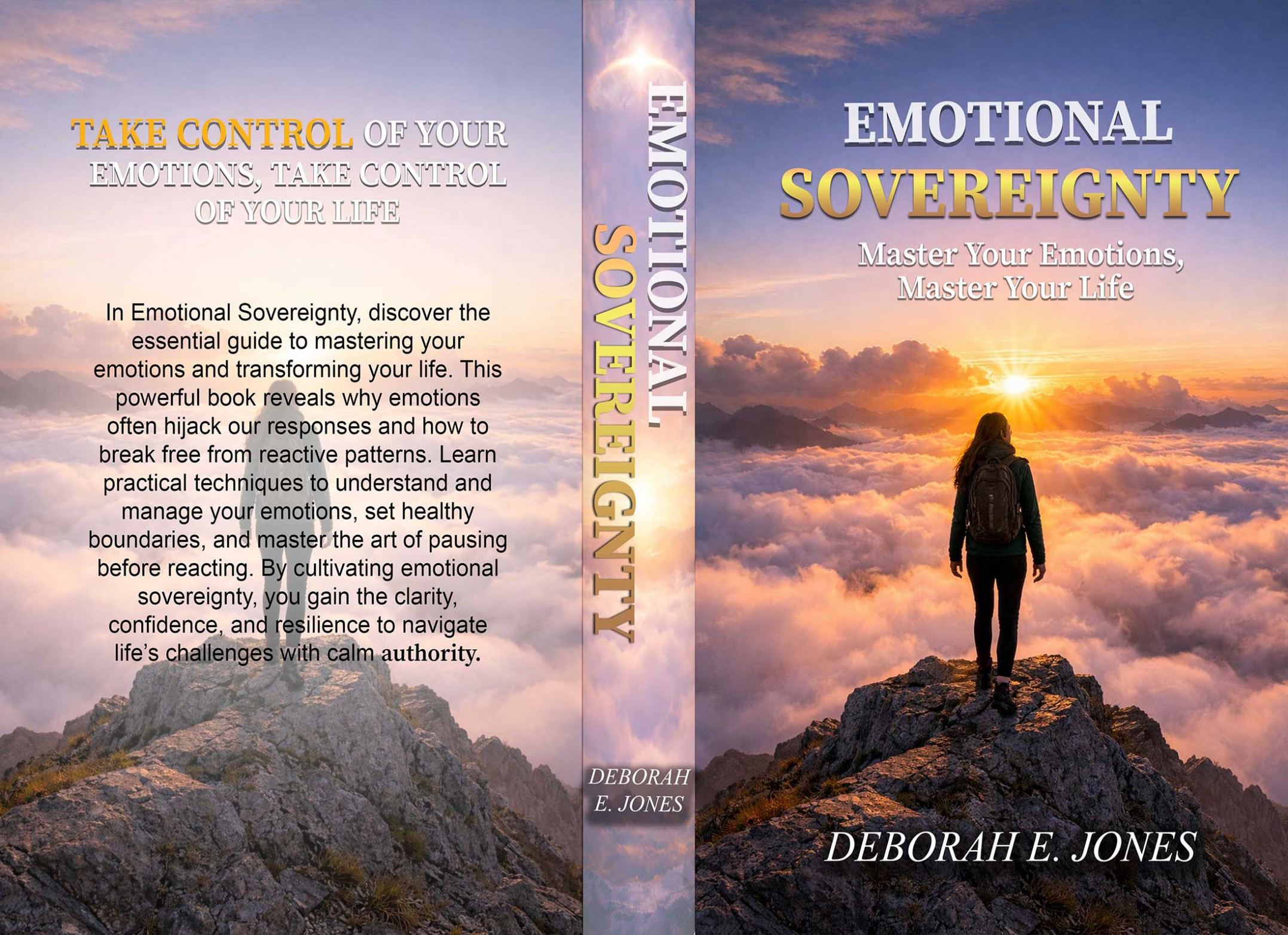
From Emotional Reactivity to Healing, Self-Mastery, and Lasting Inner Peace
ACWORTH, Ga. - TelAve -- In a world where people are constantly overstimulated, emotionally exhausted, and quietly carrying pain they do not always know how to name, the ability to govern your inner world has become one of the most important forms of strength. Many people are outwardly functional but inwardly overwhelmed. They are succeeding in some areas of life while privately struggling with triggers, emotional exhaustion, overthinking, unresolved wounds, and patterns they cannot seem to break. What they often need is not more pressure to "be strong," but a healthier understanding of how to relate to their emotions in ways that create peace, clarity, and power.
That is where emotional sovereignty becomes such a life-changing concept. It is also the central message behind Deborah E. Jones's upcoming book, Emotional Sovereignty: Master Your Emotions, Master Your Life, a work shaped by her personal healing journey, her academic background in psychology, and her commitment to helping others move from emotional survival into intentional, grounded living.
Deborah's message encourages people to stop being controlled by emotional reactions and live with awareness, strength, and responsibility!
What Emotional Sovereignty Really Means
Emotional sovereignty means controlling your emotional world rather than being ruled by it. It doesn't mean being cold or suppressing feelings. Instead, it teaches that emotions are real and valuable and deserve attention, but shouldn't dominate decisions or self-view. Many see emotions as final instructions, like rejection, anxiety, and anger, leading to immediate reactions. Emotional sovereignty creates space between feeling and action, helping people realize emotions are signals, not identity or commands.
This shift moves a person from helplessness to ownership. When they realize they can experience emotion without losing power, a new freedom begins. They start to live with more intention, stability, and self-respect.
That is where real self-mastery begins…
The Cost of Living a Reactive Emotional Life
One of the greatest barriers to peace is emotional reactivity. A reactive life is one where moods, triggers, frustrations, disappointments, and unprocessed wounds constantly determine how a person behaves. Many people are not choosing their responses with intention. They are simply repeating emotional habits that were built over years of stress, hurt, fear, or instability.
This living causes invisible damage to relationships, work, parenting, decision-making, and health. Small conflicts turn major from old wounds; difficult talks are avoided out of fear; yes, is often no due to guilt, and some shut down for safety. These are frequently learned patterns, not personality traits. Living reactively feels normal in survival mode, shaping life by automatic responses rather than values. Over time, reactivity drains energy and causes disconnection. Emotional regulation is vital, helping individuals regain control of their lives.
How Trauma Quietly Shapes Emotional Patterns
To honestly understand emotional struggle, we must discuss unresolved pain. What many call overreaction often stems from unresolved emotional injury. Healing from trauma is crucial, as trauma doesn't always manifest dramatically. It can show as chronic defensiveness, numbness, people-pleasing, perfectionism, panic, distrust, shame, or constant guardedness—unhealed trauma conditions the body and mind to expect danger, even where none exists. A tone of voice might feel threatening, criticism like rejection, and relationship distance like abandonment. These reactions seem extreme, but often come from a nervous system that learned to stay alert for survival.
More on TelAve News
Many struggle to "calm down," not due to willpower but history. Unprocessed pain leaves the body with memories the mind might overlook, creating emotional patterns for protection. These include controlling, avoidant, explosive, and withdrawn behaviors, or taking on too much responsibility for others' emotions. These survival responses once helped, but now hinder living freely.
Deborah's work addresses this with compassion and honesty. Her message isn't about shaming for emotional struggles but about helping people understand their patterns and showing that trauma healing is possible through awareness, reflection, and practice.
The Difference Between Suppression and Mastery
A common mistake in conversations about emotional strength is assuming that strong people do not feel much. That is simply not true. Some of the most emotionally mature people feel deeply. The difference is that they have learned how to process what they feel without becoming ruled by it. Emotional suppression hides feelings, creating pressure beneath calm appearances. People may smile with resentment, say they're fine while overwhelmed, or avoid tough emotions. These buried feelings can surface as anger, burnout, anxiety, distance, or exhaustion.
Emotional mastery is something else entirely. It is honest, aware, and grounded. It allows sadness without letting it control the day, acknowledges anger without destruction, and recognizes fear without giving it the final say. It's the core of emotional intelligence, not the absence of emotion, but wise management. This distinction matters because many people have been praised for being "strong" when in reality they have only become emotionally silent.
True mastery does not disconnect a person from their feelings…
It teaches them how to move through those feelings with wisdom, dignity, and care…
Why Self-Awareness Is the Beginning of Change
If emotional sovereignty is the destination, self-awareness is the doorway.
You cannot regulate what you refuse to recognize…
You cannot heal what you do not name…
You cannot transform a pattern you keep repeating unconsciously…
This is why self-mastery begins with attention: noticing feelings, when and where they appear, the thoughts attached, and the stories told.
That level of awareness is powerful because it interrupts autopilot…
Instead of saying, "I am just angry," a self-aware person begins to ask what touched this anger. Was it disrespect, fear, embarrassment, powerlessness, or old pain? Instead of reacting instantly, they become curious. And curiosity is healing. It slows the nervous system, opens insight, and creates room for truth.
A lot of emotional suffering is worsened not just by feelings but by how we interpret them. For example, feeling anxious might lead someone to believe something terrible will happen; feeling rejected might make them think they're unworthy; and feeling hurt might cause them to assume harm was intended.
But emotions are not always facts:
This is why mindset transformation matters. When awareness grows, interpretation changes. When interpretation changes, response changes. And when response changes consistently, life changes.
Practical Shifts That Begin Emotional Mastery
Healing goes beyond insight; it involves consistent action. Building emotional sovereignty occurs through daily, honest choices. Each step strengthens resilience. One of the most powerful shifts is learning to pause before reacting. The pause is sacred, allowing wisdom to catch up with triggers. Even ten seconds or one deep breath can interrupt old patterns and save conversations. In the pause, personal power returns. Another shift is learning to name emotions accurately. People often say they are angry when they're hurt, or say they are fine when ashamed, afraid, or flooded. Language creates clarity and choice. Accurately identifying what happens inside helps you become less controlled by it.
More on TelAve News
It is also essential to separate the feeling from the story. Feeling rejected does not always mean you were rejected. Feeling unsafe does not always mean you are actually in danger. Feeling overlooked does not always mean you are unworthy. This is where emotional intelligence and mindset transformation begin working together.
You learn to question the automatic narrative rather than surrender to it…
Healthy boundaries are another part of emotional mastery…
Many emotionally exhausted people are not weak at all; they are just overextended. They take in a lot, make excuses, tolerate more than they should, and then wonder why they feel so overwhelmed. Remember, setting boundaries isn't selfish—it's a kind act of caring for yourself.
Boundaries help protect your peace, lessen resentment, and foster healthier relationships…
How Emotional Mastery Changes Relationships and Decisions
When people begin to develop emotional stability, every area of life can improve. Relationships become healthier because communication becomes less defensive and more thoughtful. Instead of reacting impulsively, a person learns to listen, reflect, and respond in ways that build trust. They stop expecting others to manage emotions they have never learned to manage themselves.
Decision-making becomes clearer when grounded. Poor choices often stem from emotional flooding; fear causes avoidance, loneliness prompts compromise, anger results in damage, and insecurity leads to self-sabotage. Being grounded reduces the influence of temporary emotions on long-term consequences.
Emotional mastery fosters inner peace, not a superficial peace dependent on things going right, but a deeper stability from within. Life still includes stress, disappointment, grief, and challenges. Emotional sovereignty doesn't eliminate these but enhances resilience to face them without breaking down. This makes the concept powerful: it's not just about feeling better, but living better; staying present, thoughtful, and steady amid difficulties.
That is real power…
That is real freedom…
Why Deborah E. Jones's Message Matters Right Now
Deborah E. Jones writes from a place that is both informed and deeply personal. Her work is grounded in the study of psychology, but it is also shaped by lived experience, emotional recovery, and the desire to help others move from pain into wholeness. Her upcoming book, Emotional Sovereignty: Master Your Emotions, Master Your Life, offers more than encouragement. It offers a framework for people who are tired of being emotionally pulled in every direction and are ready to reclaim their inner authority.
This message resonates because it balances truth and hope. It recognizes emotional struggles, trauma, wounds, and slow change, but also emphasizes that healing and emotional maturity are possible. It suggests that the power people seek externally may be within them all along.
A Final Word on Reclaiming Your Inner World
There's a liberating truth in realizing you don't have to stay trapped in the same emotional cycles. You can change your reactions, move away from pain, triggers, and old patterns that no longer serve your goals. Growth starts when you notice, reflect, heal, and choose differently. It begins when you stop outsourcing peace to people, outcomes, or circumstances that are always changing. Mastering your life begins by relating to emotions with wisdom rather than fear.
That is the invitation of emotional sovereignty…
It is the invitation to become more aware, more intentional, and more whole. It is the invitation to practice self-mastery, deepen emotional intelligence, pursue trauma healing, strengthen emotional regulation, and embrace the kind of personal growth that transforms not just feelings, but the entire direction of a life.
Deborah E. Jones's upcoming book, Emotional Sovereignty: Master Your Emotions, Master Your Life, offers a grounded, empowering guide for mindset transformation and trauma healing, exploring this journey with honesty, insight, and hope. To learn more and start your emotional self-leadership journey, click here!
That is where emotional sovereignty becomes such a life-changing concept. It is also the central message behind Deborah E. Jones's upcoming book, Emotional Sovereignty: Master Your Emotions, Master Your Life, a work shaped by her personal healing journey, her academic background in psychology, and her commitment to helping others move from emotional survival into intentional, grounded living.
Deborah's message encourages people to stop being controlled by emotional reactions and live with awareness, strength, and responsibility!
What Emotional Sovereignty Really Means
Emotional sovereignty means controlling your emotional world rather than being ruled by it. It doesn't mean being cold or suppressing feelings. Instead, it teaches that emotions are real and valuable and deserve attention, but shouldn't dominate decisions or self-view. Many see emotions as final instructions, like rejection, anxiety, and anger, leading to immediate reactions. Emotional sovereignty creates space between feeling and action, helping people realize emotions are signals, not identity or commands.
This shift moves a person from helplessness to ownership. When they realize they can experience emotion without losing power, a new freedom begins. They start to live with more intention, stability, and self-respect.
That is where real self-mastery begins…
The Cost of Living a Reactive Emotional Life
One of the greatest barriers to peace is emotional reactivity. A reactive life is one where moods, triggers, frustrations, disappointments, and unprocessed wounds constantly determine how a person behaves. Many people are not choosing their responses with intention. They are simply repeating emotional habits that were built over years of stress, hurt, fear, or instability.
This living causes invisible damage to relationships, work, parenting, decision-making, and health. Small conflicts turn major from old wounds; difficult talks are avoided out of fear; yes, is often no due to guilt, and some shut down for safety. These are frequently learned patterns, not personality traits. Living reactively feels normal in survival mode, shaping life by automatic responses rather than values. Over time, reactivity drains energy and causes disconnection. Emotional regulation is vital, helping individuals regain control of their lives.
How Trauma Quietly Shapes Emotional Patterns
To honestly understand emotional struggle, we must discuss unresolved pain. What many call overreaction often stems from unresolved emotional injury. Healing from trauma is crucial, as trauma doesn't always manifest dramatically. It can show as chronic defensiveness, numbness, people-pleasing, perfectionism, panic, distrust, shame, or constant guardedness—unhealed trauma conditions the body and mind to expect danger, even where none exists. A tone of voice might feel threatening, criticism like rejection, and relationship distance like abandonment. These reactions seem extreme, but often come from a nervous system that learned to stay alert for survival.
More on TelAve News
- 5 Things to Check Before Calling for AC Repair in Philly
- Go Dental Clinic Announces Upcoming Opening of New Branch in International City, Dubai
- Hazel E Hosts Starline Tours Bus to Sonic Desert - A Launch to Coachella
- Contracting Resources Group and Aalis Management Consulting Launch ARG Joint Venture Under SBA Mentor-Protégé Program
- Card makers turn to Pink and Main for tools to support their craft
Many struggle to "calm down," not due to willpower but history. Unprocessed pain leaves the body with memories the mind might overlook, creating emotional patterns for protection. These include controlling, avoidant, explosive, and withdrawn behaviors, or taking on too much responsibility for others' emotions. These survival responses once helped, but now hinder living freely.
Deborah's work addresses this with compassion and honesty. Her message isn't about shaming for emotional struggles but about helping people understand their patterns and showing that trauma healing is possible through awareness, reflection, and practice.
The Difference Between Suppression and Mastery
A common mistake in conversations about emotional strength is assuming that strong people do not feel much. That is simply not true. Some of the most emotionally mature people feel deeply. The difference is that they have learned how to process what they feel without becoming ruled by it. Emotional suppression hides feelings, creating pressure beneath calm appearances. People may smile with resentment, say they're fine while overwhelmed, or avoid tough emotions. These buried feelings can surface as anger, burnout, anxiety, distance, or exhaustion.
Emotional mastery is something else entirely. It is honest, aware, and grounded. It allows sadness without letting it control the day, acknowledges anger without destruction, and recognizes fear without giving it the final say. It's the core of emotional intelligence, not the absence of emotion, but wise management. This distinction matters because many people have been praised for being "strong" when in reality they have only become emotionally silent.
True mastery does not disconnect a person from their feelings…
It teaches them how to move through those feelings with wisdom, dignity, and care…
Why Self-Awareness Is the Beginning of Change
If emotional sovereignty is the destination, self-awareness is the doorway.
You cannot regulate what you refuse to recognize…
You cannot heal what you do not name…
You cannot transform a pattern you keep repeating unconsciously…
This is why self-mastery begins with attention: noticing feelings, when and where they appear, the thoughts attached, and the stories told.
That level of awareness is powerful because it interrupts autopilot…
Instead of saying, "I am just angry," a self-aware person begins to ask what touched this anger. Was it disrespect, fear, embarrassment, powerlessness, or old pain? Instead of reacting instantly, they become curious. And curiosity is healing. It slows the nervous system, opens insight, and creates room for truth.
A lot of emotional suffering is worsened not just by feelings but by how we interpret them. For example, feeling anxious might lead someone to believe something terrible will happen; feeling rejected might make them think they're unworthy; and feeling hurt might cause them to assume harm was intended.
But emotions are not always facts:
- Sometimes they are signals.
- Sometimes they are echoes.
- Sometimes they are invitations to look deeper.
This is why mindset transformation matters. When awareness grows, interpretation changes. When interpretation changes, response changes. And when response changes consistently, life changes.
Practical Shifts That Begin Emotional Mastery
Healing goes beyond insight; it involves consistent action. Building emotional sovereignty occurs through daily, honest choices. Each step strengthens resilience. One of the most powerful shifts is learning to pause before reacting. The pause is sacred, allowing wisdom to catch up with triggers. Even ten seconds or one deep breath can interrupt old patterns and save conversations. In the pause, personal power returns. Another shift is learning to name emotions accurately. People often say they are angry when they're hurt, or say they are fine when ashamed, afraid, or flooded. Language creates clarity and choice. Accurately identifying what happens inside helps you become less controlled by it.
More on TelAve News
- Revenue Optics Completes Full Commercial Buildout. A Nine-Month-Old Firm Built on 25 Years of Distribution Expertise. Five Clients From $200M to $3B
- EduCare Inc. Bridges Critical Gap in Breast Cancer Education with Spanish COPE Library Launch
- Engineering leaders from industry, academia to gather at IISE Annual Conference & Expo in Arlington, Texas
- AI-Driven Neurotechnology Expansion as FDA Path Clears and New Defense Initiative Emerges for NRx Pharmaceuticals (N A S D A Q: NRXP)
- BestDoc Launches AI Call Center for Healthcare
It is also essential to separate the feeling from the story. Feeling rejected does not always mean you were rejected. Feeling unsafe does not always mean you are actually in danger. Feeling overlooked does not always mean you are unworthy. This is where emotional intelligence and mindset transformation begin working together.
You learn to question the automatic narrative rather than surrender to it…
Healthy boundaries are another part of emotional mastery…
Many emotionally exhausted people are not weak at all; they are just overextended. They take in a lot, make excuses, tolerate more than they should, and then wonder why they feel so overwhelmed. Remember, setting boundaries isn't selfish—it's a kind act of caring for yourself.
Boundaries help protect your peace, lessen resentment, and foster healthier relationships…
How Emotional Mastery Changes Relationships and Decisions
When people begin to develop emotional stability, every area of life can improve. Relationships become healthier because communication becomes less defensive and more thoughtful. Instead of reacting impulsively, a person learns to listen, reflect, and respond in ways that build trust. They stop expecting others to manage emotions they have never learned to manage themselves.
Decision-making becomes clearer when grounded. Poor choices often stem from emotional flooding; fear causes avoidance, loneliness prompts compromise, anger results in damage, and insecurity leads to self-sabotage. Being grounded reduces the influence of temporary emotions on long-term consequences.
Emotional mastery fosters inner peace, not a superficial peace dependent on things going right, but a deeper stability from within. Life still includes stress, disappointment, grief, and challenges. Emotional sovereignty doesn't eliminate these but enhances resilience to face them without breaking down. This makes the concept powerful: it's not just about feeling better, but living better; staying present, thoughtful, and steady amid difficulties.
That is real power…
That is real freedom…
Why Deborah E. Jones's Message Matters Right Now
Deborah E. Jones writes from a place that is both informed and deeply personal. Her work is grounded in the study of psychology, but it is also shaped by lived experience, emotional recovery, and the desire to help others move from pain into wholeness. Her upcoming book, Emotional Sovereignty: Master Your Emotions, Master Your Life, offers more than encouragement. It offers a framework for people who are tired of being emotionally pulled in every direction and are ready to reclaim their inner authority.
This message resonates because it balances truth and hope. It recognizes emotional struggles, trauma, wounds, and slow change, but also emphasizes that healing and emotional maturity are possible. It suggests that the power people seek externally may be within them all along.
A Final Word on Reclaiming Your Inner World
There's a liberating truth in realizing you don't have to stay trapped in the same emotional cycles. You can change your reactions, move away from pain, triggers, and old patterns that no longer serve your goals. Growth starts when you notice, reflect, heal, and choose differently. It begins when you stop outsourcing peace to people, outcomes, or circumstances that are always changing. Mastering your life begins by relating to emotions with wisdom rather than fear.
That is the invitation of emotional sovereignty…
It is the invitation to become more aware, more intentional, and more whole. It is the invitation to practice self-mastery, deepen emotional intelligence, pursue trauma healing, strengthen emotional regulation, and embrace the kind of personal growth that transforms not just feelings, but the entire direction of a life.
Deborah E. Jones's upcoming book, Emotional Sovereignty: Master Your Emotions, Master Your Life, offers a grounded, empowering guide for mindset transformation and trauma healing, exploring this journey with honesty, insight, and hope. To learn more and start your emotional self-leadership journey, click here!
Source: Global Author Publishing
0 Comments
Latest on TelAve News
- InterMountain Management Announces the Re-opening of Holiday Inn Express & Suites Alexandria
- CB Stuffer Expands New England Footprint with Launch at Common Man Roadside in Hooksett, NH
- Contracting Resources Group Named to the 2026 Inc. Regionals: Mid-Atlantic List
- Dividend Stock Guru Unveils High Yield Dividend Stock Research Reports
- Charging Into the $30 Billion Heart Failure Market with Late-Stage Momentum, Breakthrough Data, & Strong Financial Backing: Cardiol Therapeutics $CRDL
- All American Home Renovators: Transforming Bathrooms into Masterpieces, One Home at a Time
- Bold Beauty Project Celebrates Anniversary with Collaborative Exhibition at FIU's Miami Beach Urban Studios
- Pacific Emblem Company Launches "Happy 250th Birthday America" Collection and Proud Supporter of the Gary Sinise Foundation
- Bold Beauty Project Announces Exhibition at Palazzo Mora Venice, Italy
- Financial Educator Jessica Perrone Launches Free "3 Stages of Building Wealth" Course for Women
- Captain Notepad Expands Free Custom Design Services Across Full Product Line
- Sycor Introduces Spring Release 2026 of Sycor.Rental with AI-Driven Innovations and Enhanced Service Processes
- YOKE Expands NIL Club Into Athlete-Led Commerce With Athlete Merch Launch
- Floor Kings Announces Official Launch of Premier Epoxy Flooring Services Across Arizona
- UK Buyers Purchase Luxury Home in Keene's Pointe, Windermere (Orlando, Florida)
- Instant IP Launches Rapid Takedown Service to Combat IP Theft, Deepfakes, and Copycat Websites
- Su Che Publishing Announces New Children's Book Celebrating Vaisakhi Festival
- Permian Museum Adds Photos of Fossils Discovered on a Meteorite
- This Saturday: Open House for Manalapan's Newest Single Family Home Community
- Radarsign™ Awarded Sourcewell Contract Expanding Access to Traffic Safety Solutions